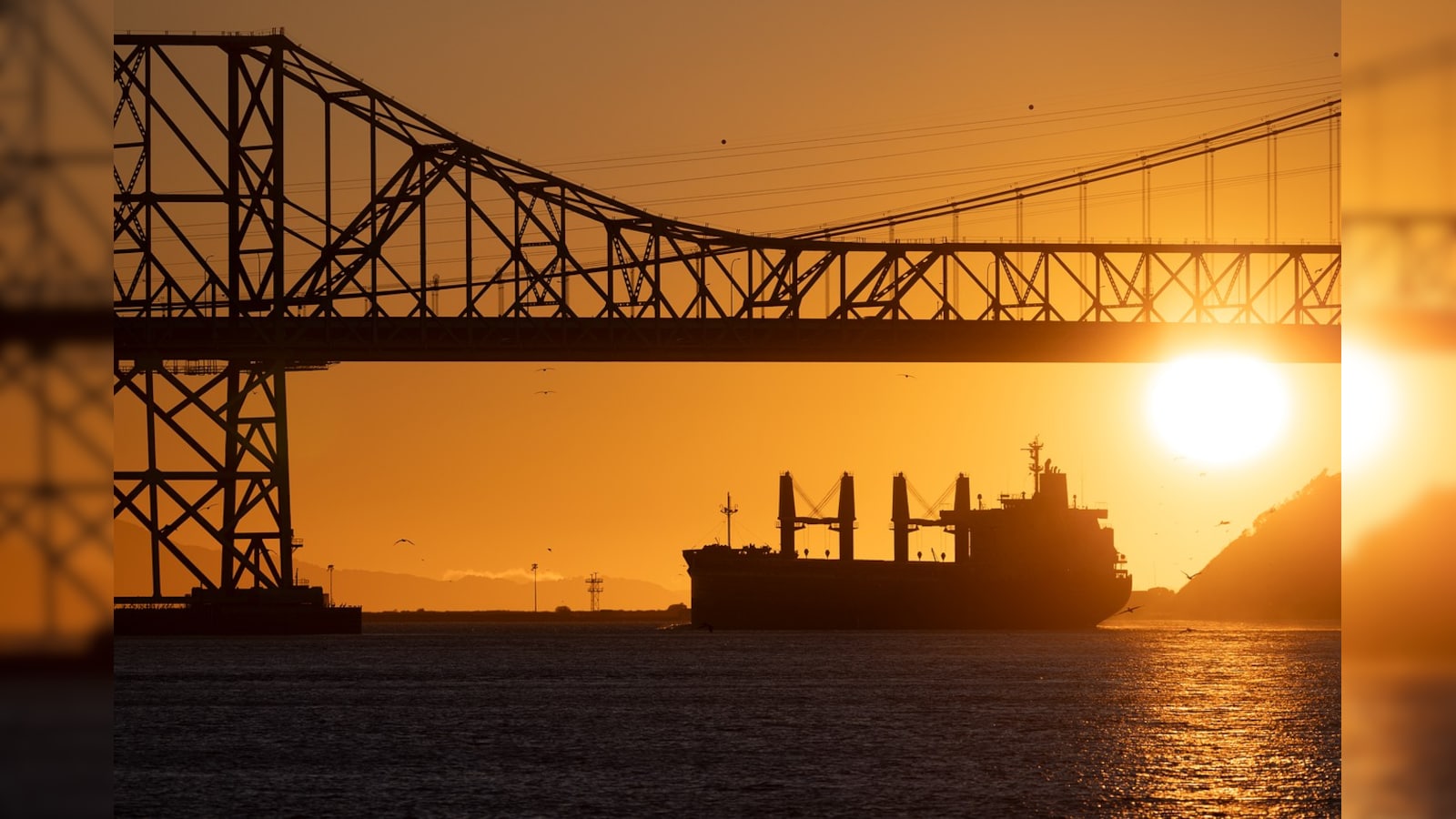
Nearly 80 million barrels of crude oil are waiting at the mouth of the Persian Gulf, poised to move through the Strait of Hormuz if a tentative diplomatic thaw between the US and Iran translates into a sustained reopening of one of the world’s most important energy corridors.



According to data compiled by Vortexa and reported by Bloomberg, around 40 very large crude carriers (VLCCs) loaded with non-sanctioned crude from Gulf producers are currently positioned inside the Persian Gulf. The figure excludes Iranian oil and does not account for smaller tankers, meaning the total volume of crude waiting to move could be significantly higher.
The buildup highlights the stakes surrounding ongoing diplomatic efforts between Washington and Tehran. Markets are closely watching whether a recent US-Iran understanding to restore shipping through Hormuz can lead to a meaningful resumption of energy flows after months of disruption.
The Strait of Hormuz handles a substantial portion of the world’s seaborne oil trade. Before the conflict disrupted traffic, roughly 15 million barrels per day of crude from Gulf producers were shipped to Asian buyers.
ALSO READ: Trump Envoy Heads To Switzerland For Potential US-Iran Talks After Lebanon Ceasefire: What To Expect?
Tankers Begin Testing the Waters
Bloomberg reported that 21 VLCCs are currently signalling routes toward Asia, including five bound for China. Another five are heading toward ship-to-ship transfer hubs near Malaysia and Singapore. At least three vessels were seen moving toward the Strait of Hormuz at normal cruising speeds on Friday.
Oil tankers are expected to be among the first vessels to test the route because of the high value of their cargo and the urgency of delivering supplies to refiners that have been facing disruptions. Yet uncertainty remains.
Three Saudi supertankers reappeared in the Gulf of Oman on Thursday, suggesting that vessel traffic is gradually resuming. However, shipping industry group BIMCO has cautioned that significant security risks remain despite the US-Iran agreement.
ALSO READ: Rain Deficit To Push Inflation; Oil Prices Unlikely To Return To Pre-War Levels, RBI MPC Member Warns
ADNOC Pushes Buyers to Resume Loadings
Further evidence of confidence returning to the market came from the United Arab Emirates. According to a separate Bloomberg report, Abu Dhabi National Oil Co. (ADNOC) has instructed customers to resume lifting crude from its export terminals at Das and Zirku islands inside the Persian Gulf.
The company told long-term buyers that cargoes remain available for loading and warned that failure to take delivery could constitute a breach of contractual obligations. ADNOC also indicated it could provide affiliated vessels if customers were unable to secure their own tankers.
The developments are being closely watched by oil traders, refiners and shipping companies worldwide. A sustained reopening of Hormuz could unlock tens of millions of barrels currently stranded in the Gulf, easing concerns about supply shortages that have driven sharp volatility in oil prices.
(With inputs from Bloomberg)
ALSO READ: ‘Not A Lunatic Rant’: Iran’s Araghchi Says Israel’s Only Interest Is Permanent War
Essential Business Intelligence,
Sharp Market Insights,
Practical Personal Finance Advice, Daily Fuel, Gold and Silver Prices and Latest Stories — On NDTV Profit.
Source link
#Crude #Standby #Million #Barrels #Oil #Ready #Cross #Strait #Hormuz #USIran #Peace #Deal