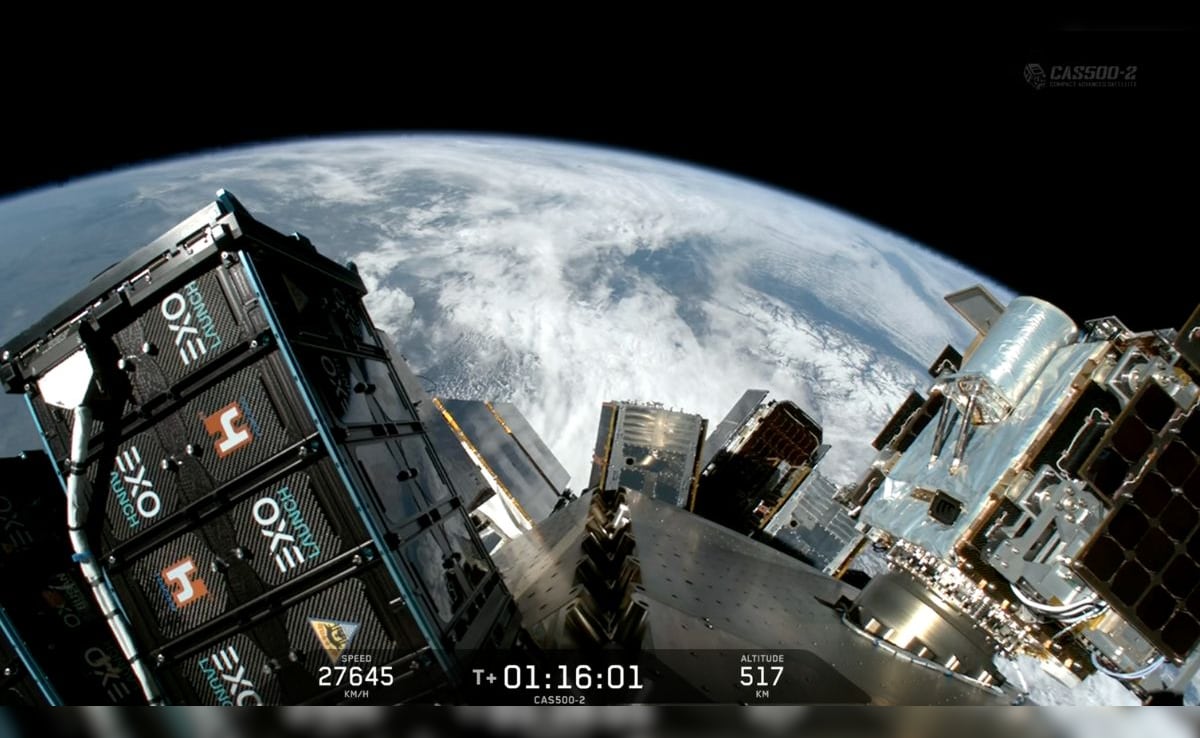
A little after noon on May 3, a SpaceX Falcon 9 rocket lifted off from Vandenberg, California, carrying with it an Indian satellite that could quietly change how the world looks at Earth. As the rocket arced into the sky, Mission Drishti, built by Bengaluru-based start-up GalaxEye, soared into orbit, marking a defining moment for India’s fast-rising private space sector. Now in orbit, the game-changer satellite will give sleepless nights to both China and Pakistan as India can now peer down on them. The full constellation will give 365-day coverage, but that is still some distance away. India lacked this capability during Operation Sindoor and had to rely on American commercial imagery to show how air bases in Pakistan were bombed out by the Indian Air Force. A military commander told NDTV, “We will now be able to plug some gaps that we had during Operation Sindoor.”



Within hours, Prime Minister Narendra Modi hailed the achievement as a landmark in India’s space journey, underscoring both its technological significance and the message it sends about India’s young innovators.
“Mission Drishti by GalaxEye marks a major achievement in our space journey. The successful launch of the world’s first OptoSAR satellite and the largest privately built satellite in India is a testament to our youth’s passion for innovation and nation-building. Heartiest congratulations and best wishes to the founders and the entire team of GalaxEye,” Prime Minister Narendra Modi said.
At the heart of this mission is a satellite unlike any that has flown before. Mission Drishti is the world’s first operational OptoSAR satellite, fusing electro-optical imaging and Synthetic Aperture Radar (SAR) on a single platform. Weighing 190 kilograms, it is also India’s largest satellite ever built by a private company.
Also read: How Indian Start-up’s Drishti Satellite Could Be New Headache For Pak, China
The technical leap lies in what Drishti can do. Optical sensors deliver clear, intuitive images but are limited by clouds and darkness. SAR, by contrast, can see through cloud cover and operate day and night, though its imagery is harder to interpret. By synchronising both sensors into one system, Drishti offers a persistent, all-weather view of the planet, one that does not blink when the skies close or the sun sets.
In strategic terms, this means an Indian “eye in the sky” with what one observer described as deep-penetrating, hawk-like vision, capable of monitoring terrain and activity regardless of weather or time. In today’s world, that persistence matters. What cannot be seen cannot be assessed, and what cannot be assessed cannot be acted upon.
Lt. Gen. A.K. Bhatt (Retd.), the Director General of the Indian Space Association (ISpA), said, “The successful launch of GalaxEye’s first satellite under Mission Drishti marks a pivotal shift in India’s approach to Earth observation. It serves as a definitive proof-of-concept for India’s private space sector reforms and signals a transition from small-scale testing to sovereign, all-weather surveillance capabilities critical for national security and disaster response”.
What makes the achievement stand out globally, Gen. Bhatt noted, is the OptoSAR capability itself.
Also read: India’s Latest Nuclear Reactor Win Can Lead To 700 Years Of Energy Security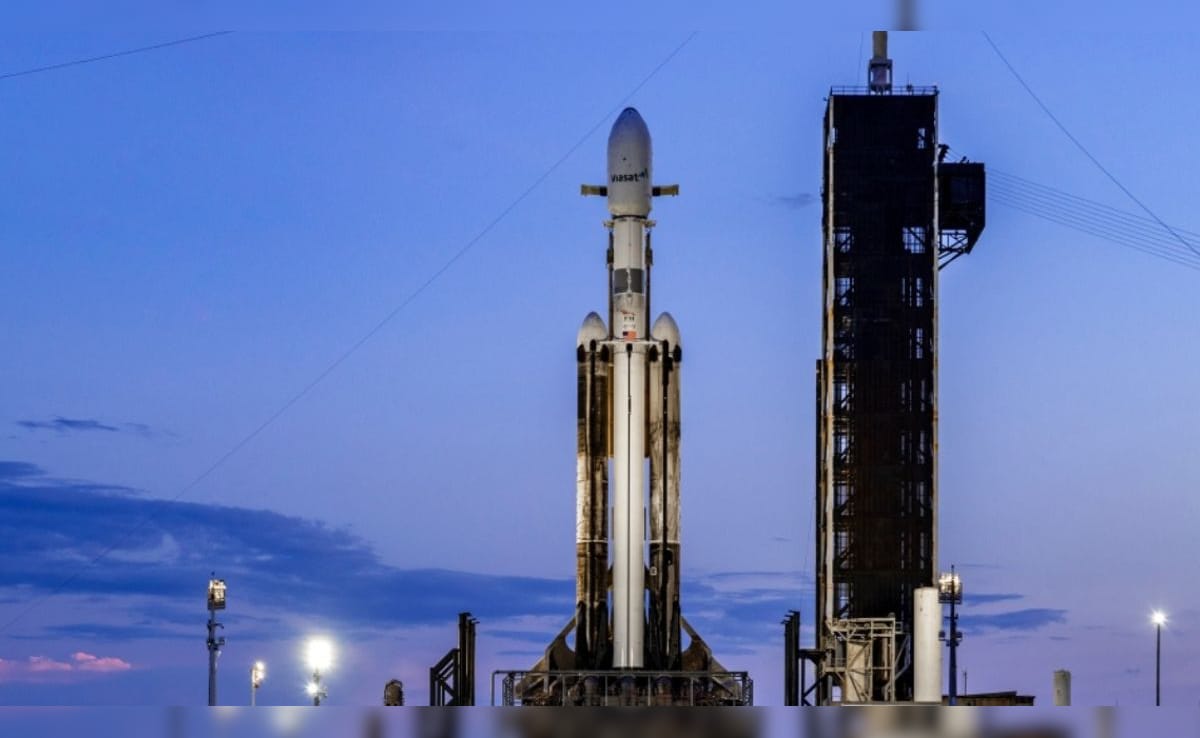
“With the world’s first commercial OptoSAR sensor, GalaxEye seamlessly combines optical and SAR capabilities on a single platform to enable persistent, all-weather intelligence. What stands out is not just the technology, but its broader impact on how downstream applications will increasingly define value in the space economy,” he added.
Misson Drishti
Mission Drishti is the outcome of more than five years of sustained indigenous research and development, shaped at a time when India’s space sector has been undergoing a quiet but profound transformation. From a system dominated by government missions, the ecosystem is now opening up to private players building high-value, IP-driven technologies with global relevance.
That shift has been actively nurtured by institutions like IN-SPACe, India’s space regulator and promoter for private activity. Its Chairman, Dr Pawan Goenka, described Drishti as evidence that those reforms are now delivering results in orbit. “The sustained effort over the last five to six years on confidence-building, capacity-building, and the commercialisation of India’s private space technology ecosystem is now showing tangible results. Mission Drishti by GalaxEye is a fine example of this, the world’s first OptoSAR satellite from an Indian private player,” Dr Goenka said.
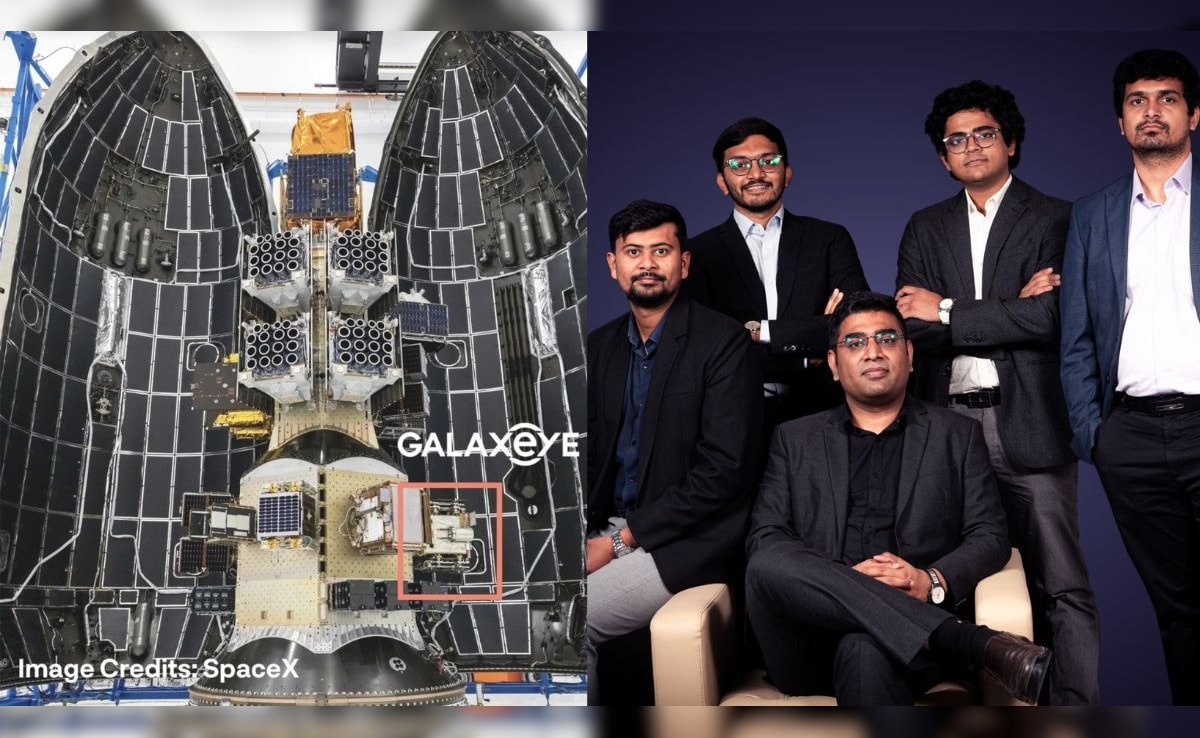
He added that as more Indian companies demonstrate real missions and secure global customers, confidence in India’s space ecosystem will continue to grow, both domestically and overseas.
For Suyash Singh, Founder and CEO of GalaxEye, the launch represents the crossing of a long and demanding threshold.
“Mission Drishti marks our first mission and the culmination of over five years of sustained R&D to develop this breakthrough technology. With the satellite now successfully in orbit, our immediate focus is on completing its commissioning,” he said, noting that global interest in the OptoSAR-enabled datasets is already strong.
Once fully commissioned, initial imagery is expected to be delivered in the coming weeks, with demand from both government and commercial users. The satellite is a dual-use platform, supporting applications across defence, agriculture, disaster management, maritime monitoring, and infrastructure planning.
GalaxEye has also announced a landmark partnership with NewSpace India Limited (NSIL), ISRO’s commercial arm, to distribute its imagery globally, extending the reach of Indian private satellite data into international markets.
Beyond this single mission, the company plans to expand its OptoSAR constellation over the next five years, contributing to a more sovereign and resilient Earth observation capability for India.
As Mission Drishti circles the planet for the first time, its significance is already clear. A rocket lifting off from California has placed a uniquely Indian sensor in orbit, one that sees clearly when others cannot. In an era where information from space underpins security, resilience, and decision-making, Drishti signals that India’s private sector is no longer just testing the waters; it is shaping the view from above.
Source link
#OptoSAR #Satellite #Boost #Indias #SpaceBased #Surveillance