4 min readNew DelhiUpdated: Mar 2, 2026 04:31 PM IST



Lunar Eclipse (Chandra Grahan) 2026 date and timings: A total lunar eclipse will take place between March 2-3, 2026, with people in many parts of the world, including India, expected to witness the celestial event.
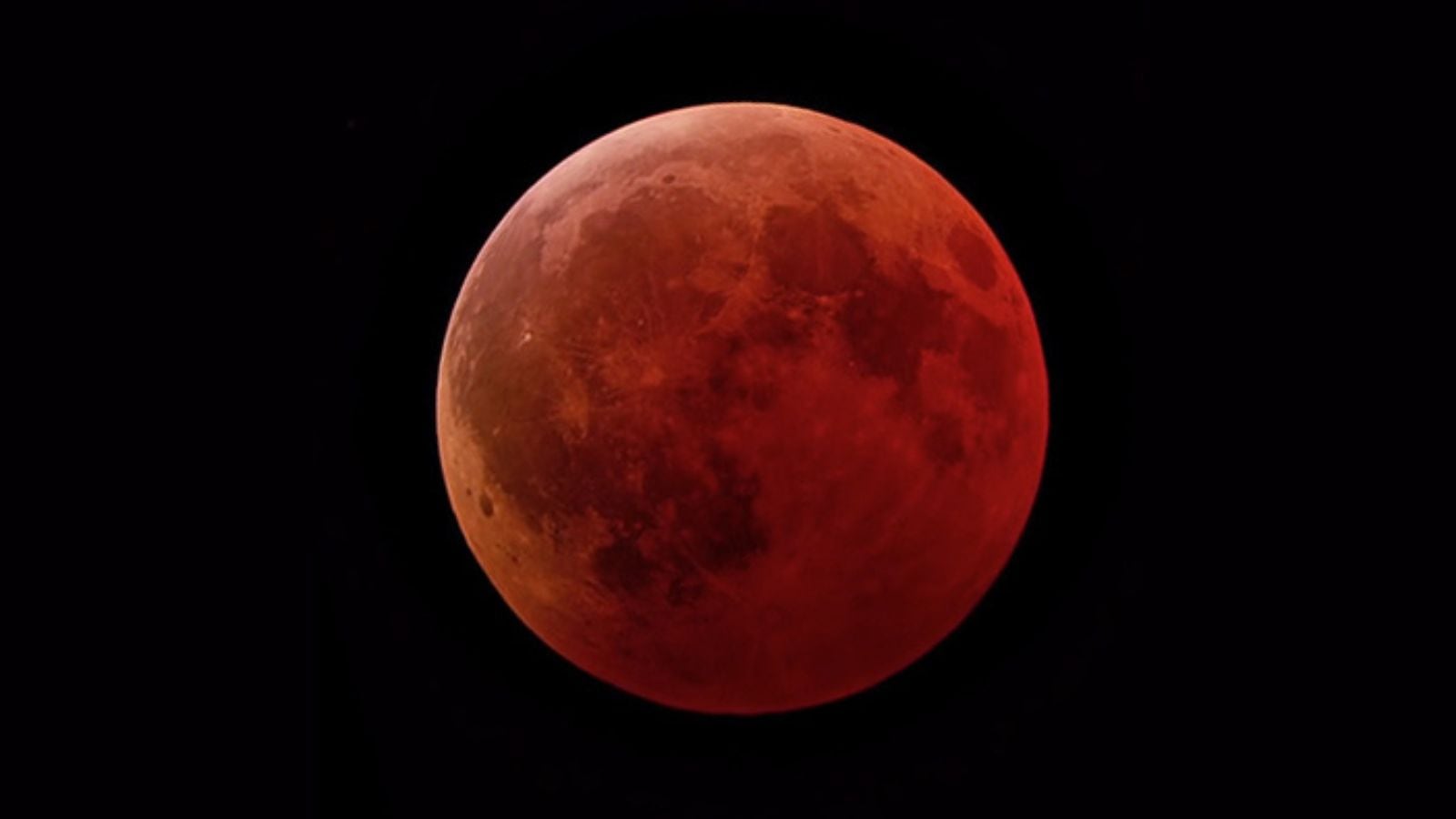
A total lunar eclipse occurs when the Earth completely blocks sunlight from reaching the Moon. As the Moon passes through the darkest part of Earth’s shadow, it takes on a reddish hue, which is why it is often called a ‘Blood Moon’. The spectacular event will be visible in parts of North America, the Pacific Region, Australia, New Zealand, and East Asia. Many places in India will be able to view the total lunar eclipse, as per reports.

This year’s lunar eclipse also takes place in the same week as the prominent and auspicious Hindu festival known as Holi. The partial overlap is supposed to be a rare coincidence that happens once in a 100 years.
Lunar Eclipse 2026 Date and Time
The total lunar eclipse is expected to begin in the afternoon of Tuesday, March 3, and end sometime in the evening on the same day. While some reports suggest that it will last a total of 58 minutes, others state that it could continue for a few hours. Between 6:33 PM and 6:40 PM IST is supposedly the best time to see the eclipse.
What is the science behind the ‘Blood Moon’ eclipse?
Since this is a rare total lunar eclipse, the moon will pass completely through Earth’s shadow. When it comes completely in the shadow of Earth, the lunar disk will turn a copper-reddish colour. Astronomers say that this reddish colour comes from all the sunrises and sunsets around Earth’s rim at that moment. The sunlight skims through Earth’s atmosphere, and gets refracted or bent by the atmosphere into the umbra, that is, the area of the Moon experiencing the total phase of the eclipse.
A total lunar eclipse occurs in five phases, with the central phase resulting in a ‘Blood Moon’. In the penumbral phase, the Moon first enters Earth’s faint outer shadow also known as the penumbra. The partial eclipse occurs when the moon moves into the umbra, the darker central shadow of the Earth. It gradually darkens and reddens in this phase.
The total phase of the lunar eclipse occurs when the entire surface of the Moon is covered by the umbra and turns reddish-orange in colour. This phase is again followed by the initial partial eclipse phase and penumbral eclipse phase.
Story continues below this ad
How to watch the total lunar eclipse?
According to reports, the best time to watch the total lunar eclipse is when the Moon’s rise aligns best with sunset. Unlike a partial or total solar eclipse, a lunar eclipse is completely safe to watch with a naked eye. You do not need certified eye protection to see, though having a binocular or telescope will surely help.
When is the next lunar eclipse?
This is reportedly one of 13 full moons in 2026, which is a year that includes an extra full moon because it is a lunar year and is said to be 11 days shorter than a solar year. There will be two super-moons, when the full moon comes close to perigee, on November 24 and December 24.
After March, there will be another partial lunar eclipse on August 27 to 28 this year. In partial lunar eclipses, only 96 per cent of the full moon moves through Earth’s umbra. The lunar eclipse comes just weeks after a ‘ring of fire’ annular solar eclipse was witnessed on February 17.
As for the next total lunar eclipse, it is expected to occur on New Year’s Eve 2028.
Source link
#Lunar #Eclipse #Chandra #Grahan #date #India #timings #Visibility #livestream #details