

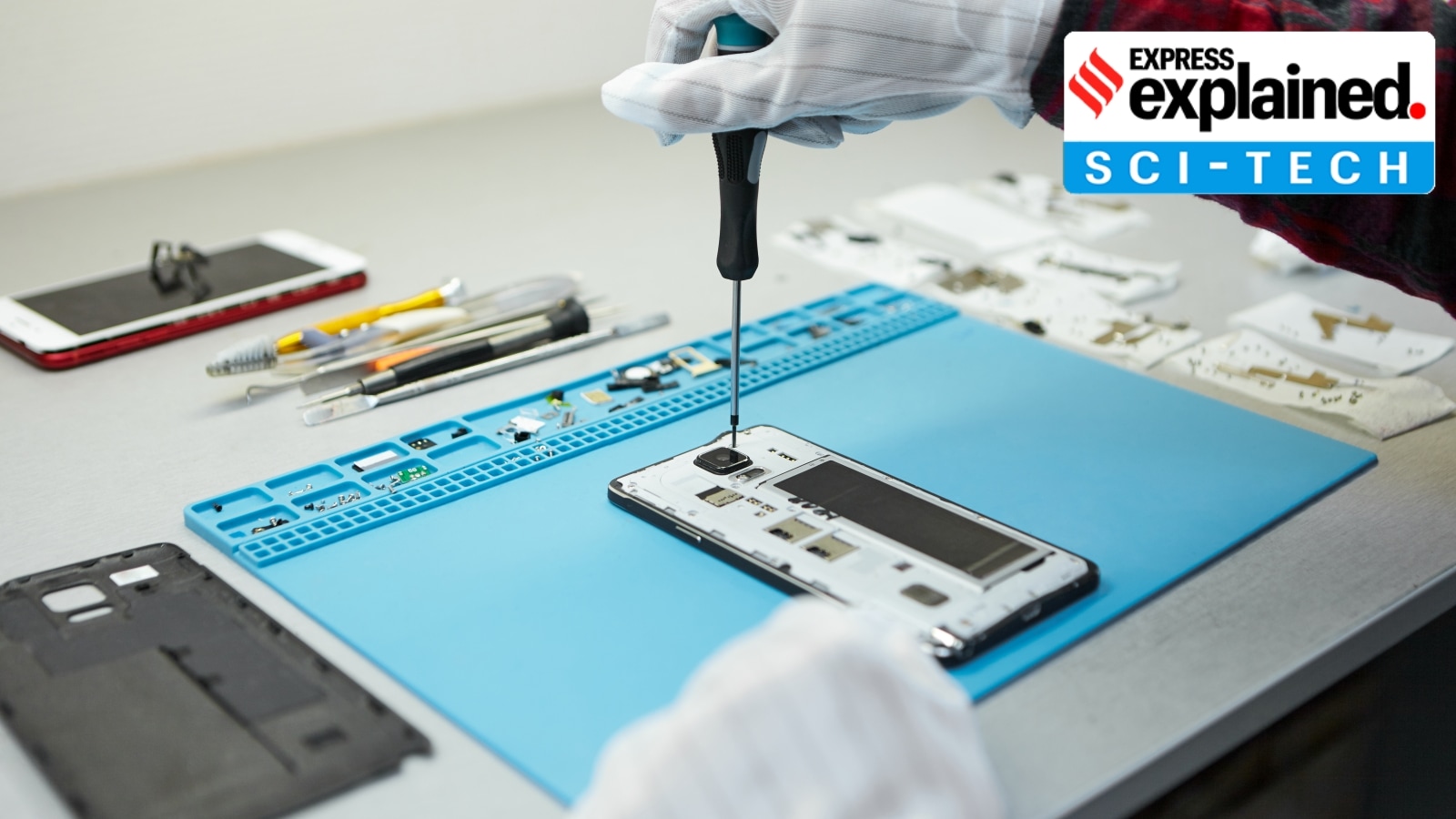
Smartphone sales, especially those at the budget end of the spectrum, are beginning to hit a wall, thanks to the surging price of random access memory (RAM) — basic memory that once was one of the cheapest smartphone and computer components — which has more than tripled in value since October 2025.
The cost of memory as a percentage of the total cost of a low-end phone has surged from under 10% to over 40% now. Like phones and laptops, rising memory costs could end up impacting other electronic devices such as smart TVs and medical devices.



The single biggest reason for the surge in memory cost is the explosive growth in the data centres which power artificial intelligence (AI), which has started to fall back on RAM now from the previous heavy reliance on graphics processing units (GPUs). What that’s leading to is a longer usage duration of smartphones especially in price-sensitive markets such as India. And the proportionate increase is higher in the lower end of the market, where price elasticity is higher.
AI has triggered a global memory shortage by pushing chipmakers to divert production towards lucrative high-bandwidth memory used in data centres, leaving less conventional dynamic RAM (DRAM) available for smartphones and personal computers (PCs) and driving up prices across the electronics supply chain.
How the AI boom is hitting budget phones, computers
According to a report by market intelligence firm Counterpoint Research, memory will account for a massive 43% of the total bill of materials (BOM) for smartphones priced under Rs 20,000 ($200), and their whole BOM may climb by as high as 25% in 2026. For top end phones, priced above Rs 80,000, BOM costs could rise by Rs 10,000-Rs 15,000 by the second quarter of 2026.
BOM is the total cost of all components and materials required to manufacture a product, excluding expenses such as marketing, distribution and taxes, and is a crucial metric used by manufacturers to assess profitability and pricing strategy.
Shenghao Bai, senior analyst at Counterpoint, noted: “The memory price surge is delivering a structural impact to smartphone BOM costs. In 2026, OEMs will struggle to balance component costs, gross margins and shipment targets. Those who rely heavily on entry-level models to drive market share will face a significant risk of short-term losses.”
Story continues below this ad
The way that manufacturers will mitigate these rising costs, according to Counterpoint, is by reducing expected shipment targets for low-end models, downgrading non-core specifications to offset costs, and simply passing the cost on to customers.
“Considering the massive memory price surge, standard cost-cutting measures may only result in limited returns. A rise in retail prices seems unavoidable in 2026. We expect low-end retail prices to increase by around $30, while the cost pressures on some premium flagships will likely be passed on to consumers, resulting in price hikes of $150 to $200,” Shenghao said.
Soaring memory costs are projected to drive worldwide PC shipments to decline 10.4% and smartphone shipments to drop by 8.4% in 2026, compared to 2025 levels, according to Gartner, Inc., a business and technology insights company.
Gartner estimates a 130% surge in combined DRAM and solid-state drive prices by the end of 2026, which will increase PC prices by 17% and smartphone prices by 13%, compared with 2025 levels. This situation will concentrate demand on premium devices.
Story continues below this ad
“This is the steepest contraction in device shipments witnessed in over a decade. Higher prices will narrow the range of devices available, prompting buyers to hold on to devices for longer, fundamentally altering upgrade cycles,” said Ranjit Atwal, senior director analyst at Gartner.
Because of rising costs, Gartner expects PC lifetime to increase by 15% for business buyers and 20% for consumers by the end of 2026. These delayed upgrades will further raise concerns over increased security vulnerabilities and challenges of managing older devices.
Why AI is so hungry for memory
The surge in RAM prices is largely a consequence of how the AI boom has reshaped the memory industry.
AI servers built by companies such as Nvidia require enormous quantities of high-bandwidth memory (HBM), a specialised form of memory that allows AI chips to process data much faster. As demand for AI infrastructure exploded, memory manufacturers, which include Samsung, SK Hynix, and Micron among others, began diverting more production capacity towards HBM and server-grade DRAM, which offer far higher margins than memory used in smartphones and PCs, according to a report by intelligence and consultancy firm TrendForce.
Story continues below this ad
With the new phase of AI evolution focused less on training of models alone — where Nvidia’s GPUs were essentially — to a renewed focus now on running AI continuously across enterprise workflows and agents in what is described in industry parlance as inferencing (making sense of the training data), there’s an accompanying shift in the chip requirement in this AI pivot.
This shift is effectively bringing older technology categories back into focus: including older chips called central processing units or CPUs (basic, no GPU chips) and memory or analog chips of the kind made by Samsung, SK Hynix, and Micron. And, of course, this renewed demand for HBM is being witnessed now.
As manufacturers of traditional memory shift to serve the AI boom, the problem that’s arising is on account of memory production capacity being finite — every wafer allocated to HBM is one less wafer available for conventional DRAM.
DRAM is the standard memory used in smartphones, PCs, and servers for everyday data storage and processing, offering relatively lower speed at a lower cost. HBM is a specialised type of DRAM in which memory chips are stacked vertically and placed close to AI processors, enabling much faster data transfer but at a significantly higher cost.
Story continues below this ad
At the same time, cloud providers and AI companies have been locking in long-term memory supplies for data centres, further tightening availability. According to TrendForce, strong AI and data-centre demand has widened the gap between supply and demand, giving memory suppliers unprecedented pricing power. Conventional DRAM contract prices were forecast to rise as much as 90-95% quarter-on-quarter in 2026.
Source link
#expensive #phones #PCs #consumers #paying #boom




