

4 min readApr 16, 2026 03:34 PM IST
First published on: Apr 16, 2026 at 03:22 PM IST


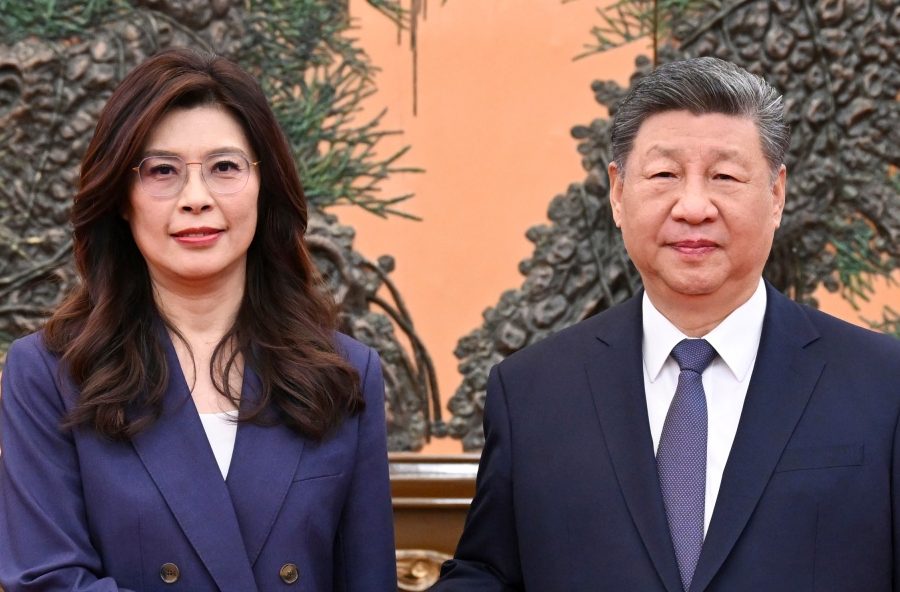
Cheng Li-wun, the chairwoman of the Kuomintang Party (KMT), concluded her visit to China on April 12, the first sitting KMT leader to do so in a decade. She expressed support for Xi Jinping and stated that the “rejuvenation of the Chinese people is a shared aspiration of the people on both sides of the Strait”. Xi, on his part, said at the meeting that China will “absolutely not tolerate” Taiwan’s independence.
Cheng was elected chair of the KMT in 2025, and she has been a divisive figure because of her strong pro-unification stance. Some Taiwanese have even called her “goddess of unification”. This is not the first time that the Chinese Communist Party, or Xi, has engaged with the KMT. The KMT has been welcomed by the CCP, given its unified stance towards the one-China policy and the 1992 Consensus, which states that the two sides of the Taiwan Strait belong to China.

The reactions to the meeting from Taiwan came along expected lines. Taiwan’s top China policymaker, Chiu Chui-cheng, told the media in Taipei that “Taiwan’s people could decide their future and China should engage with Taipei’s democratically elected and legitimate government”. Even the US reiterated that Beijing should stop the show of force towards Taipei with its military drills across the Taiwan Strait and interact with the elected government.
China considers the elected president, Lai Ching-te, of the Democratic Progressive Party (DPP) as a “separatist” and “troublemaker” because of the “pro-independence” stance of the DPP. Lai’s predecessor, Tsai Ing-wen, also of the DPP, had refused to recognise the 1992 Consensus. This resulted in a major show of force from Beijing, and during her tenure, Taiwan lost a large number of diplomatic allies. But even after continued shows of force, the Taiwanese people re-elected the DPP in the January 2024 presidential election. Consequently, China has continued its grey zone tactics.
This also brings into focus the current $40 billion special defence budget. The DPP has been trying to push this through the legislature, where the KMT holds a legislative majority. Reports suggest that Cheng had blocked it right before her trip to China, another way to show support for unification. China has continued to forcefully object to the US’s sale of arms and defence equipment to Taiwan. However, the US is committed to helping Taiwan under the Taiwan Relations Act (TRA).
The interdependence across the Strait is quite obvious. Taiwan continues to manufacture around 60 per cent of the global advanced chips and semiconductors crucial for cars, mobiles and other technologies. During Cheng’s visit, Beijing announced that it is ready to re-establish some form of connectivity, which it had suspended due to the DPP’s policies.
China is also reportedly ready to start direct flights and some imports of Taiwanese aquaculture products. Some Taiwanese TV dramas, documentaries and other shows will also be allowed; however, they must adhere to “correct orientation, healthy content, and high production quality”. China has termed these “gifts”. But the situation across the Taiwan Strait continues to be tense this week as Beijing deployed around 100 naval and coast guard vessels.
One cannot ignore the timing of the trip. Reports suggest that the fact that the US is busy with the Iran situation and is focused on West Asia provides Beijing with an opening to expedite its unification project, whatever the means may be. Trump’s upcoming visit to China in May 2026 will also determine Xi’s course.
In conclusion, Beijing continues to assert its claim and eventual unification, while the Taiwanese people have continued to show their support for the status quo. China has reiterated that Taiwan is the red line that no one should cross; Chinese reactions to the Japanese prime minister’s statements are a case in point.
But the resumption of some of its suspended ties indicates that blocking Taiwan has also been affecting China. Economic interconnectedness and the slowdown in the Chinese economy may be more fundamental factors pushing Beijing to extend “gifts” to Taiwan.
The writer is an associate professor at O P Jindal Global University
Source link
#Goddess #Unification #China #Xis #play #Taiwan #KMT




