


This article contains spoilers for “Disclosure Day.”
Despite enjoying a prolific 50-plus year career as a filmmaker who was instrumental in creating the summer blockbuster, Steven Spielberg has never been particularly big on direct sequels. I’ve chosen my words carefully there, because while Spielberg has made several sequels to his own films, only one of them (“Indiana Jones and the Kingdom of the Crystal Skull”) feels like a true direct sequel. The rest have been more anthology-like, with only one or two returning characters and the barest of references to prior events. Movies like “Indiana Jones and the Temple of Doom” and “The Lost World: Jurassic Park” are more concerned with exploring new territory than revisiting the past.
Even so, the fact that Spielberg is not completely averse to reviving his past gives fans hope that he might surprise us by making another legacy sequel. After all, what is “The Fablemans” but the director revisiting his own childhood? Fan hope rekindled anew when the secrecy surrounding this week’s “Disclosure Day” began to grow over the past year. Speculation arose that the film, which marks Spielberg’s return to sci-fi blockbuster fare since 2018’s “Ready Player One,” could be a stealth sequel to 1977’s “Close Encounters of the Third Kind” given its subject matter. While there are similarities between the two films, to be sure, Spielberg goes out of his way to keep the movies narratively separated from each other. However, there happens to be one major callback to “Close Encounters” hidden in the film, and it’s not something seen or spoken. Instead, it’s John Williams’ score which contains an indirect reference to “Close Encounters” via both films’ use of tunes from the Disney animation songbook, the better to represent the fairy-tale quality of first contact with extraterrestrials.
The Close Encounters reference in Disclosure Day is a deep cut for fans of the former
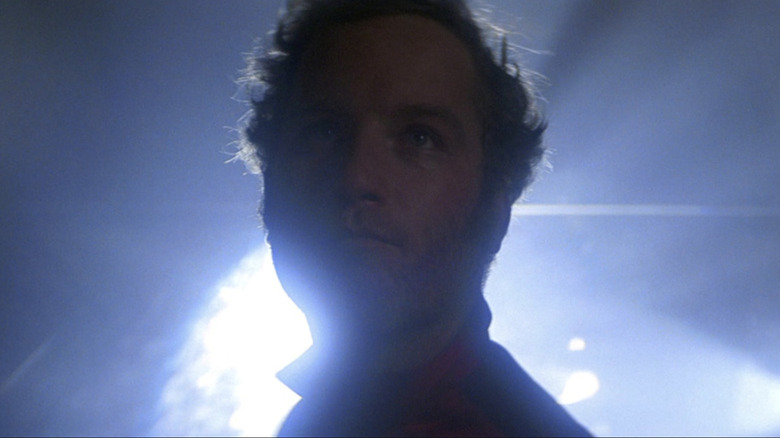
Given the plot of “Disclosure Day,” it would’ve been relatively easy for Steven Spielberg to throw in a “Close Encounters” Easter egg somewhere. The film concerns the revelation of decades’ worth of evidence that factions of the world’s governments know about and have covered up the existence of extraterrestrial life. So while an appearance from Richard Dreyfuss’ Roy Neary from “Close Encounters” may have been overdoing it, it would’ve been easy to have a recognizable Easter egg crop up: a character could’ve mentioned an encounter from 1977, or perhaps a bit of footage from Devil’s Tower might’ve been shown amongst the clips we see during the film, or some such thing. Instead, a song from 1937’s “Snow White and the Seven Dwarfs” is used during a key moment in the film, harkening back to the appearance of “When You Wish Upon a Star” (from 1940’s “Pinocchio”) in “Close Encounters.”
However, the “Pinocchio” song isn’t prominent in every version of “Close Encounters.” While references to “Pinocchio” exist in every cut of the movie, there’s only one small use of “When You Wish Upon a Star” in John Williams’ score for the film’s Theatrical and Director’s cuts. In those versions, an oblique orchestration of the song’s melody is heard when Roy is marching out to meet the mothership with the other volunteer astronauts. Williams does include a lush, fully orchestrated version of the song during the back half of the film’s end credit suite, though only in the Special Edition. Thus, it’s die hard fans of “Close Encounters” who’ve studied the score and/or seen every cut of the movie who would even know about the song’s appearance and its connection to Roy.
From Jiminy Cricket to Snow White
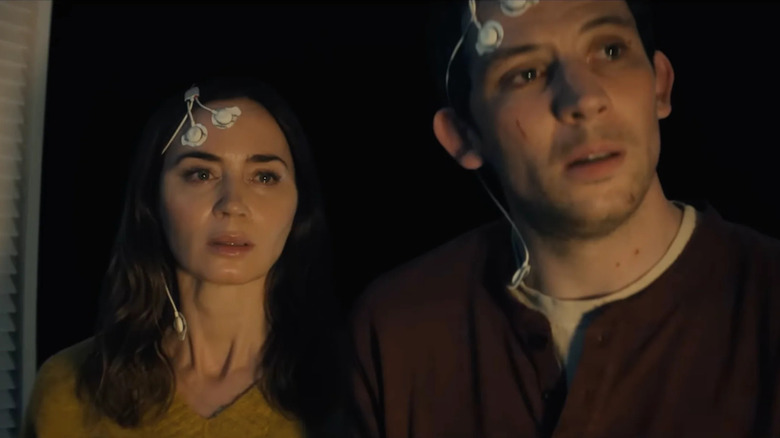
While “When You Wish Upon a Star” does not turn up in “Disclosure Day,” the song “Someday My Prince Will Come” from “Snow White” does, and it’s done in a similar manner (and serves the same thematic function) as the “Pinocchio” song does in “Close Encounters.” Late in “Disclosure Day,” Margaret Fairchild (Emily Blunt) is taken to a recreation of her childhood home by a group of defectors from Wardex, the clandestine organization who’ve kept aliens a secret from the public for nearly 80 years. The defectors know that Margaret was abducted by extraterrestrials as a child, and implanted with her special abilities while aboard an alien craft for the purpose of facilitating diplomacy with the alien race as an adult. Unlocking this memory will allow Margaret to shed her fear and anxiety and embrace this role, including understanding how the aliens often disguise themselves as animals when approaching people. As Margaret and Daniel (Josh O’Connor), another abductee, re-experience Margaret’s encounter, it’s “Someday My Prince Will Come” which helps Margaret into her formerly blocked memories.
John Williams emphasizes the significance of the song and the moment by using the song’s melody within the score, thus completing a thematic circle between the protagonists of both “Close Encounters” and “Disclosure Day.” Where Roy in the former found himself fulfilled (like Pinocchio) by being taken onto the mothership, Margaret similarly comes into her own via remembering her encounter as a girl with magical animals (like Snow White). In both cases, Steven Spielberg and Williams use the Disney references as reinforcement of the mostly benign and awe-inspiring nature of extraterrestrials. While “Disclosure Day” may not be a literal “Close Encounters” sequel, this connection allows it to at least spiritually feel like one.
“Disclosure Day” is in theaters now.
Source link
#Disclosure #Day #Surprising #Connection #Steven #Spielberg #Alien #Classic #SlashFilm