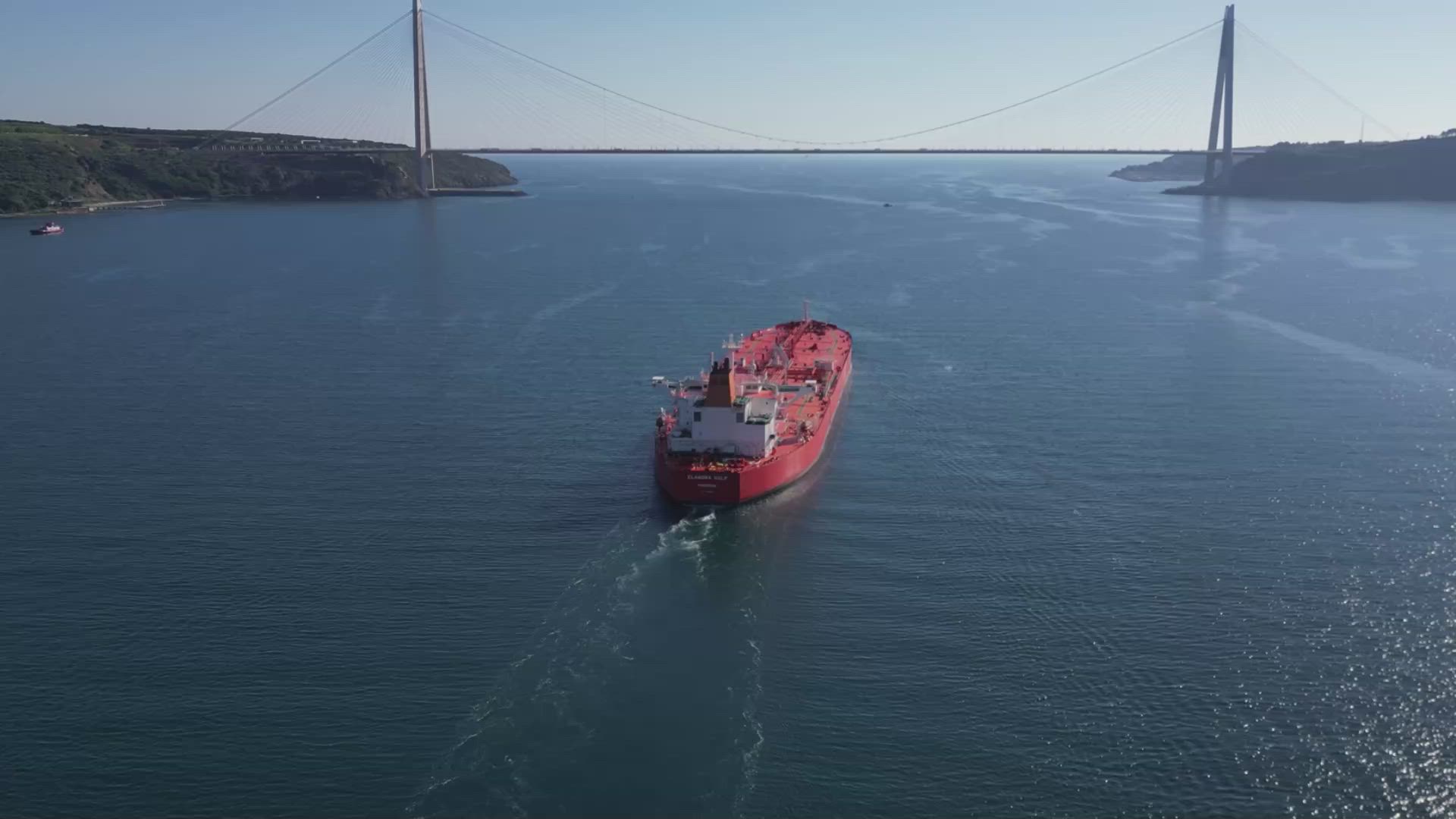
The U.S. military has been overseeing ship-to-ship oil transfers on the edge of the Strait of Hormuz during the conflict with Iran to keep oil flowing in the region, according to a new report.
Reuters detailed that U.S. forces have used aerial and water drones, as well as helicopters, to ensure the operations, which involved the guiding of convoys to tankers awaiting them. Such strategies have long been used by Iran to evade sanctions, the outlet added.



Satellite images reviewed by Reuters as recently as last week showed 17 pairs of ships conducting oil transfers. An Apache helicopter downed earlier this month, an incident which catalyzed waves of attacks between the U.S. and Iran, was involved in the operation.
Tankers with transponders off and dimmed lights sailed to a meeting point before reaching the Strait of Hormuz. The U.S. would then monitor the tankers as they reach designated areas where other ships waited for the transfers, which can take up to 40 hours to complete.
The agreement between the U.S. and Iran, which would reopen the waterway, has already led oil prices to drop further. Brent crude, the international benchmark, dropped below $80 on Tuesday for the first time since March.
However, experts have said that it is unlikely that prices will go back to pre-war levels any time soon. Société Générale strategist Kit Juckes said in a note that even though prices are “two-thirds of the way back,” the last tranche could take a long time.
Another issue that could hamper efforts to resume normal oil flows and replenish stockpiles is the removal of mines laid by Iran in the Strait of Hormuz.
Western maritime security sources cited by Reuters noted that doing so could take up to 40 or 50 days after a deal. Only then some shipping companies could be confident enough to send their vessels through the key waterway, as not all have been conducting the ship-to-ship transfers.
“We still consider it very risky for ships to commence transits at this point,” Jakob Larsen, chief safety & security officer at shipping association BIMCO, told the outlet. “The threat of mines in the area remains a concern immediately as well as further down the line and mine-free routes need to be established.”
The outlet went on to note that the chance of there being mines could lead companies to refrain from crossing. Supertankers and their cargo are worth some $300 million.
Source link
#U.S #Military #Reportedly #Oversaw #Secretive #Oil #Transfers #Bypass #Iranian #Blockade