IAG shares are falling because the British Airways owner has warned that higher jet fuel costs, linked to the Iran war and wider oil-market pressure, will cut into profit, capacity growth and free cash flow. The group now expects its 2026 fuel bill to reach about €9.0bn, leaving investors to judge how much of that shock can be passed into fares without weakening travel demand.
The first-quarter numbers were not the problem. IAG reported Q1 revenue of €7.18bn, up 1.9%, operating profit of €351m, up 77.3%, and profit after tax of €301m, up 71.0%. Investors looked beyond those figures because the company’s fuel warning changes the profit picture for the rest of the year.



Why Are IAG Shares Falling?
IAG has told investors that full-year profit will be lower than it expected at the start of 2026, with fuel costs now projected at around €9.0bn based on the fuel curve as of May 5, 2026. The fuel curve is the market’s view of where fuel prices are expected to sit in the months ahead, so a higher curve makes future airline costs look more expensive before the fuel has even been bought. IAG is 70% hedged for the remainder of the year, meaning it has already locked in prices for a large share of its expected fuel needs. That gives the group some protection against further price rises, but it does not remove the pressure entirely. The remaining unhedged fuel still has to be bought at market prices, and hedges do not stop a higher fuel curve from weighing on the group’s profit outlook.
Airline shares can fall even when demand looks solid because costs often move faster than revenue. IAG said travel demand remains robust in its main markets and booked revenue for Q2 is around 80%, in line with historic levels. The market reaction shows investors are more focused on what higher fuel costs will do to future margins than on what IAG earned in the first quarter. Shares in IAG fell after the update, with AJ Bell reporting a 4.1% drop to 380.05p in London trading. That move reflected concern that fuel, capacity and fare pressure could limit the cash IAG has available for growth, debt reduction and shareholder returns.
How the Iran War Feeds Into IAG’s €9bn Fuel Bill
The Iran war has pushed oil and fuel costs higher, and IAG’s update shows how quickly that pressure can move from global energy markets into airline earnings. For an airline group that owns British Airways, Iberia, Aer Lingus, Vueling and LEVEL, fuel is one of the core costs that determines fares, margins, capacity plans and free cash flow. IAG said the first quarter was relatively unaffected by the conflict, but it expects the impact to become more substantial through the rest of the year as higher fuel costs feed into the business. That turns the Iran war from a geopolitical event into a direct financial pressure for airlines and passengers.
The group said the summer issue is more about price than availability, and it remains confident in jet fuel supply across its main markets. In plain terms, IAG is not saying it expects to run short of fuel. The problem is that the fuel it needs is becoming more expensive, which makes the issue financial rather than operational for now.
How the €9bn Fuel Bill Hits Profit
Fuel is one of the hardest airline costs to absorb because it moves with global energy markets, geopolitics and refining supply rather than passenger demand alone. IAG can hedge, change routes, trim capacity, raise fares and use newer aircraft, but a €9bn annual fuel bill still has to show up somewhere: lower margins, higher prices, reduced capacity growth or weaker free cash flow. Free cash flow is the cash left after a company has covered its operating costs and investment spending. For an airline, it helps fund new aircraft, debt reduction, shareholder returns and financial flexibility. If fuel takes a larger share of revenue, there is less cash left for those priorities. IAG expects to recover around 60% of the higher fuel cost this year through revenue and cost management actions. That means the company believes it can offset part of the increase through fares, route choices, efficiency savings and other commercial decisions. It also means a gap remains. Passing more of the bill into ticket prices risks testing passengers’ willingness to pay. Absorbing more of the increase protects demand but puts pressure on margins. Cutting too much capacity protects pricing but limits volume growth in markets where demand remains strong.
British Airways sits close to the centre of that trade-off because IAG’s Gulf-region exposure before the conflict was mostly operated by BA, with smaller exposure at Iberia and Vueling. The group has already been reallocating capacity away from affected routes and towards markets with stronger direct demand, including India and Nairobi to the US, while also shifting some Iberia and Vueling capacity into domestic Spain.
Will Passengers Pay Higher Fares?
The investor risk now sits in how much of the fuel increase passengers will tolerate. IAG says demand is still strong in its main markets, but the group has already lowered capacity expectations from the 3% increase guided in February to around 1% in Q2 and 2% in Q3. Capacity means the number of seats and flights an airline makes available. Lower capacity can help protect pricing, because fewer seats can make it easier to hold fares up, but it also limits the amount of extra revenue the airline group can generate from volume growth.
Fare increases are easier to push through when demand is firm, especially in premium and long-haul markets where British Airways has stronger pricing power. The risk is that airline customers are also facing broader cost pressure from inflation, household budgets, petrol prices and higher energy costs. More expensive flights feed directly into the cost of holidays, business travel and long-haul family trips.
Recent Finance Monthly coverage has tracked the same cost chain across households and energy markets, from Eurozone inflation and ECB rate-cut risk to UK inflation and growth pressure and the RAC warning on fuel prices for drivers. IAG brings air travel into that wider pressure on consumers.
What Investors Are Pricing Now
IAG’s first-quarter performance was not weak. Operating margin before exceptional items rose to 4.9%, up from 2.8% a year earlier, and net debt fell to €4.18bn from €5.95bn at the end of 2025. Operating margin shows how much profit the business makes from its operations for each euro of revenue, before certain one-off items. Net debt is the company’s borrowings after taking account of cash. On both measures, IAG entered the fuel-cost shock from a stronger position than a year earlier. The sell-off reflects a harder profit bridge for the rest of the year. A company can beat in Q1 and still lose market confidence if the next few quarters look more expensive than expected. IAG now has to show that fare increases, route reallocations, hedging and cost control can protect cash flow without damaging demand.
IAG still expects to generate significant free cash flow in 2026, but now expects it to be below the €3bn guided at full-year results in February. The group also trimmed expected capital expenditure to around €3.5bn, from €3.6bn. Capital expenditure means money spent on long-term assets such as aircraft, engines, technology and infrastructure. IAG also remains on track with the remaining €1bn of excess cash returns through February 2027, meaning planned returns of surplus cash to shareholders are still expected to continue. That combination explains the share-price pressure. IAG is not facing a demand collapse, but it is facing a fuel-cost shock large enough to reduce the cash available for growth, shareholder returns and balance-sheet flexibility. The airline can recover some of the cost, but not all of it without testing passengers’ willingness to pay.
The same geopolitical chain has already shown up in energy-company earnings and consumer fuel costs. Finance Monthly has covered US gas prices as the Iran war hit household budgets, Shell’s profit beat and share-price reaction and BP profits, oil prices and consumers. Airlines sit on the opposite side of that energy-price scale: what can lift oil and gas producers can squeeze carriers and passengers.
IAG shares are falling because investors are treating the €9bn fuel bill as a live margin risk rather than a one-off headline. British Airways and the wider IAG group still have strong demand, hedging and a better balance sheet than in previous cycles, but the next test is whether the company can raise fares and rework capacity without weakening the travel demand that has supported its recovery.
Related Reading
Eurozone Inflation Hits 3% as ECB Rate Cuts Face New Risk
UK Inflation and Growth: March 2026 Analysis
RAC Fuel Price Warning: Drivers Pay More
US Gas Prices Hit $4.23 as Iran War Lands in Household Budgets
Shell Beat Profit Forecasts, So Why Did Its Shares Fall?
BP Profits, Iran War, Oil Prices, Consumers and Businesses
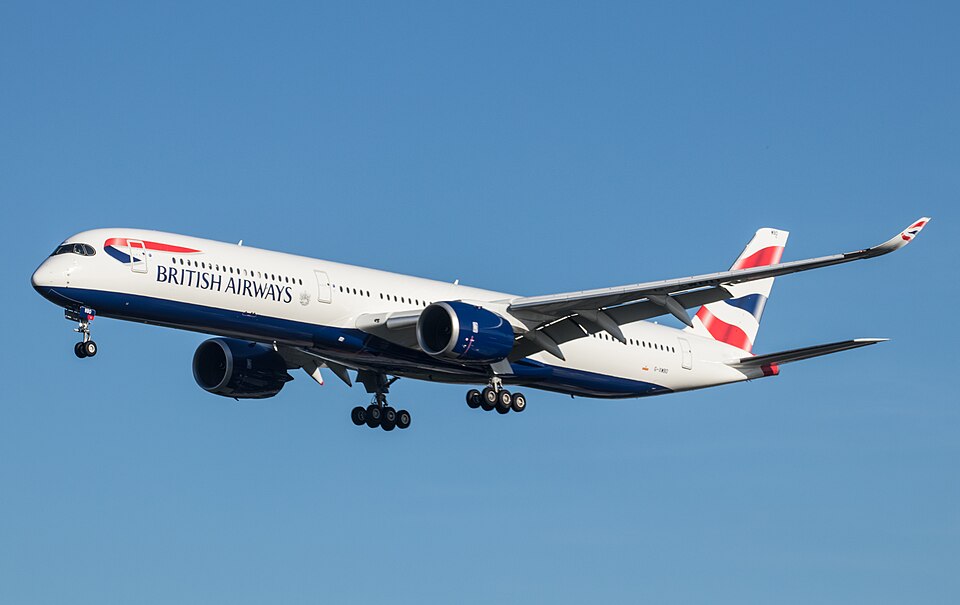
Image attribution – https://commons.wikimedia.org/wiki/File:British_Airways_A350-1000_(G-XWBD)_@_LHR,_Jan_2020.jpg
Source link
#IAG #Shares #Falling #Iran #War #Fuels #9bn #Bill