

Dear Readers,



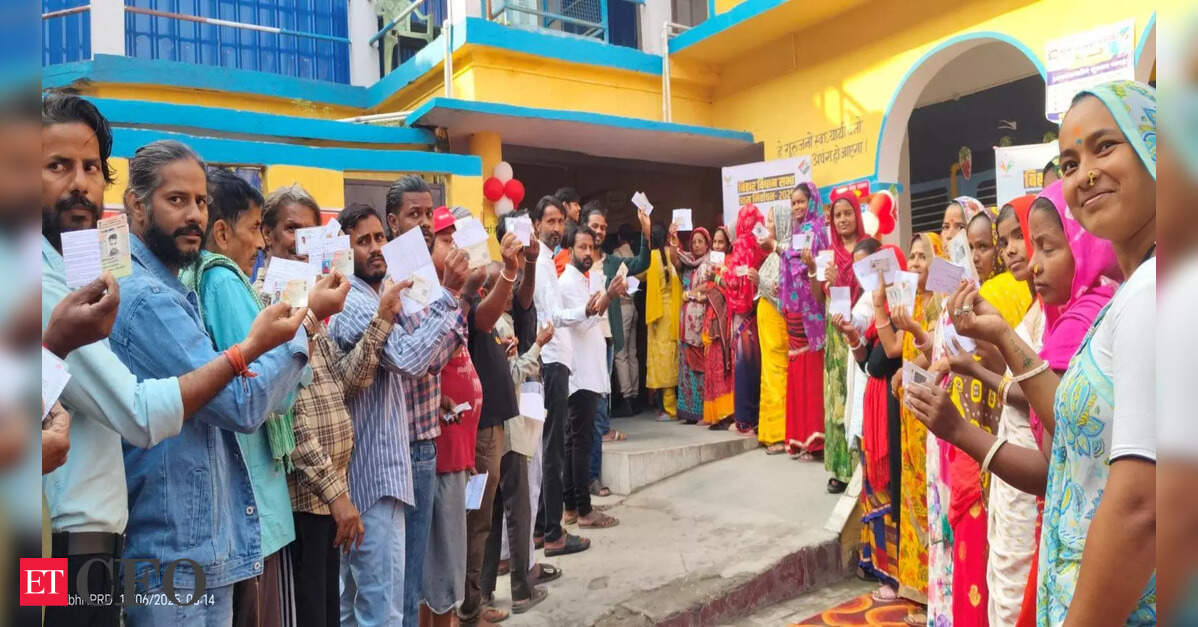
India’s four-state election jamboree has delivered both major upsets and decisive victories. But beyond the political headlines lies a far bigger question in my mind: can these mandates translate into economic transformation?
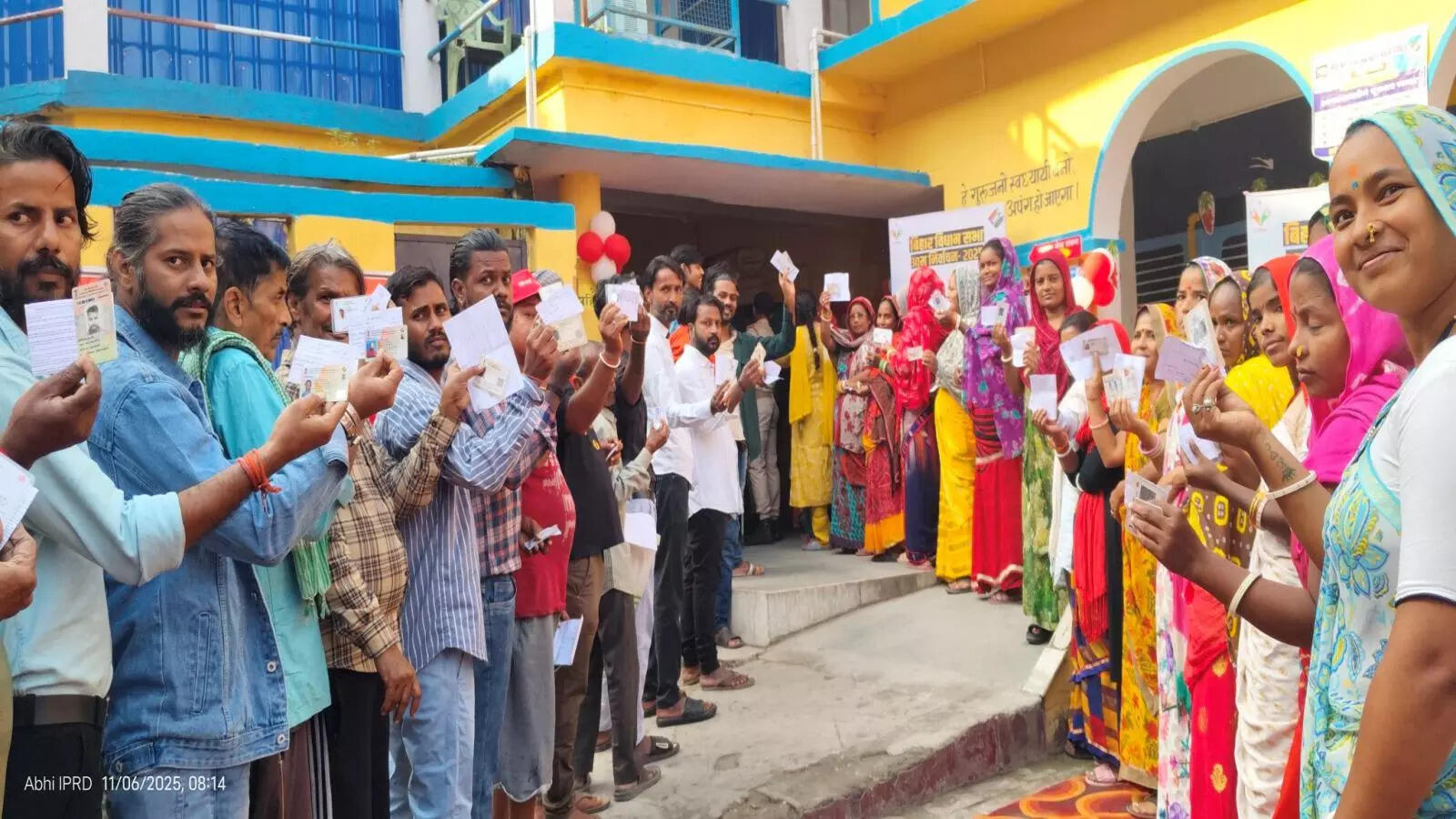
Will the new governments in West Bengal, Tamil Nadu, Kerala and Assam create stronger business ecosystems, attract investment and build durable growth engines? Or will they remain trapped in the familiar cycle of rising subsidies, weak private investment and mounting fiscal stress?
The timing could hardly be more critical. According to the Economic Survey, 18 states saw deterioration in their revenue balances between FY19 and FY25, with 10 slipping from revenue surplus into revenue deficit. The revenue pressures are particularly visible in states that witnessed political shifts in the latest elections, including West Bengal, Tamil Nadu, Kerala and Assam.
Fiscal stress meets political mandate
I think fiscal stress is no longer merely a budgeting concern; it is increasingly becoming a structural growth constraint. Several states are now spending a large share of their revenues on committed expenditure such as salaries, pensions and interest payments, leaving limited room for productive capital expenditure. In some cases, interest payments alone account for more than 15-20 per cent of revenue receipts, sharply reducing fiscal flexibility at a time when states need to invest aggressively in infrastructure, industrialisation and employment generation.
According to RBI data, committed expenditure in several states now consumes over 70 per cent of revenue receipts. This means less than one-third of state revenues remain available for infrastructure creation, industrial incentives, urban development and social asset building.
The central question, therefore, is whether political change can truly drive economic change.
Each of these states enters this phase with sharply different economic characteristics. Kerala remains a welfare-heavy, remittance-driven and highly educated state, but with limited industrial depth. Tamil Nadu is among India’s strongest manufacturing centres and a key financial hub for NBFCs. West Bengal, despite its entrepreneurial culture and strong MSME base, has struggled to regain industrial momentum over the years. Assam, meanwhile, is attempting to reposition itself as a strategic growth corridor for eastern and north-eastern India.
I believe West Bengal’s challenge is not merely attracting investment proposals, but converting them into grounded projects through faster approvals, better logistics and policy execution. Despite its strategic location, port access and deep MSME ecosystem, the state has lagged in large-scale industrial revival. The next government will need to focus on rebuilding investor confidence and creating long-term industrial ecosystems rather than relying excessively on welfare-led consumption support.
According to Elara Capital, West Bengal could be entering the early stages of a capex cycle similar to what has been witnessed in Uttar Pradesh, Odisha and Assam in recent years because BJP will focus on industrialisation, capex rejuvenation, inflation management, etc.
Tamil Nadu enters this term from a position of relative strength. It remains one of India’s largest manufacturing hubs, contributing significantly to automobiles, electronics, textiles and exports. The China-plus-one strategy adopted by global companies has already strengthened the state’s position within global supply chains. Yet even Tamil Nadu faces growing fiscal pressure from expanding welfare commitments and subsidies. The challenge now is balancing social welfare with long-term productivity creation.
Kerala presents a very different economic model. The state performs strongly on healthcare, education and remittance inflows, but industrial investment and manufacturing depth remain comparatively weak. Its ageing population profile and rising pension liabilities could place additional pressure on public finances in the coming years unless new employment engines emerge through technology, tourism, logistics and digital services.
Assam, meanwhile, could emerge as one of India’s more important frontier growth stories if infrastructure execution sustains momentum. Improved connectivity, logistics corridors, renewable energy investments and semiconductor proposals may gradually reshape the economic profile of the region. However, policy continuity and administrative execution will remain crucial.
Welfare politics vs productive capital expenditure
To my mind, the biggest challenge facing states today remains the growing dependence on welfare-led politics. Across the political spectrum, governments have increasingly relied on subsidies, cash transfers and consumption support to secure electoral mandates. The BJP had also announced multiple welfare and subsidy schemes in West Bengal, including monthly financial assistance of Rs 3,000 for women, a monthly allowance of Rs 3,000 for unemployed youth, and a promise to create 1 million jobs and self-employment opportunities over five years.
The problem is not welfare itself. Social protection remains essential in an unequal economy. The challenge arises when welfare expenditure expands without a corresponding increase in productive capacity. States cannot indefinitely finance recurring expenditure through borrowings while simultaneously hoping to sustain high-quality infrastructure creation and industrial investment.
This is why I think the next phase of governance must focus not only on honouring manifesto commitments but also on building productive economic capacity.
States have significantly increased capital expenditure after the pandemic recovery phase, but the quality and efficiency of spending remain uneven. States that successfully crowd in private investment through industrial corridors, infrastructure and policy stability are likely to sustain stronger growth than those dependent primarily on subsidy-led consumption.
The new political mandates also come with expectations of stronger financial deepening. In my view, states must improve fiscal space and expand credit access by strengthening local financial infrastructure. Scaling up NBFCs, improving microfinance penetration and widening formal credit access for MSMEs could become critical for regional growth. Equally important will be the development of municipal finance and local bond markets, which remain underdeveloped in much of India.
At the same time, the external environment has become increasingly uncertain. The macroeconomic backdrop, which until recently appeared relatively favourable, has turned more fragile because of the conflict in West Asia and broader global volatility. This could prolong inflationary pressures and weaken investment sentiment globally.
The battle for investment
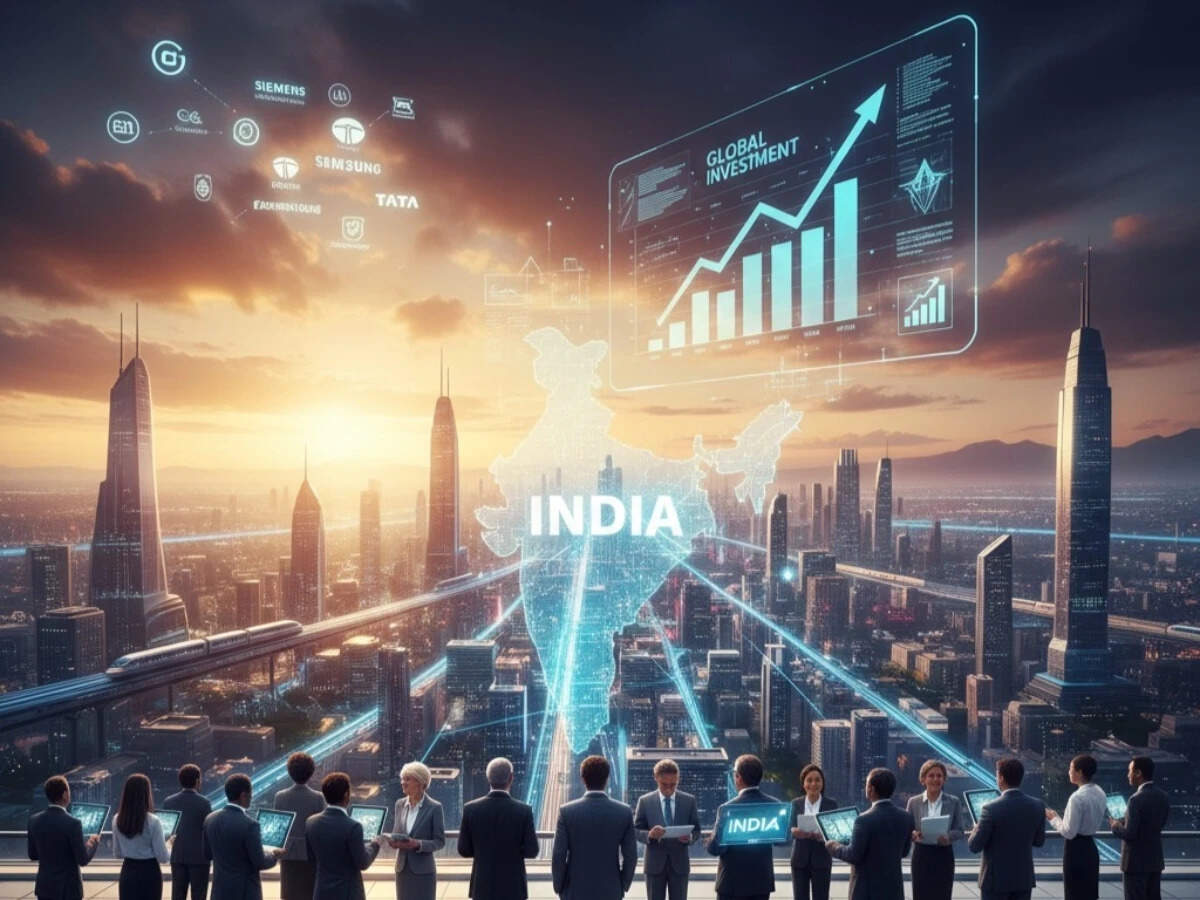
Over the years, states have become far more competitive in attracting capital. They now actively court investors at global forums such as WEF. But I think India has now reached a stage where announcements and MoUs alone are no longer enough. Telangana’s emergence as a GCC hub demonstrates that sustained execution matters far more than investment declarations.
I believe the Union Budget 2026 has also provided a broader roadmap for sectors such as semiconductors, data centres, rare earth magnets and advanced manufacturing. States that align themselves with these emerging sectors could gain disproportionately through employment creation and supply chain integration.
At the same time, India Inc would like to see states focusing on faster project clearances, efficient digital approvals, stable regulations and reduced supply chain friction. In the coming years, what may differentiate successful states from laggards is not the scale of political mandates, but the credibility of their reform strategy.
I believe India’s next economic story should not merely be about the diversity of its states in terms of culture and geography, but about how economically powerful they become and how strongly they build their business ecosystems.
Please share your feedback, suggestions if any. You can reach me on amol.dethe@timesinternet.in.
As usual, I am adding here the top 5 stories of the week, trust you will find them meaningful.
1.Section 12AB crackdown: Trusts in grey zone as ‘charity’ tested by scale, sustainability
2.Waaree Energies bets on capacity ramp-up, backward integration to power next growth phase: CFO Abhishek Pareek
3.Crude Above $100: What it means for India Inc earnings and margins in FY27
4.NFRA sets audit inspection timelines: 10-day reply, 180-day compliance; lapses public
5.Net direct tax collection rises 5% to Rs 23.40 lakh cr in FY26, misses revised budget target
Also, a special knowledge session by ETCFO, ET Legal world and JSA is taking place today on enabling India’s manufacturing growth
Happy Reading
Amol Dethe,
Editor,
ETCFO
(Editor’s note is a column written by Amol Dethe, Editor, ETCFO. Click here to read more of his articles exploring several buzzing topics)

Source link
#Election #Results #Lift #States #Economic #Fortunes





