

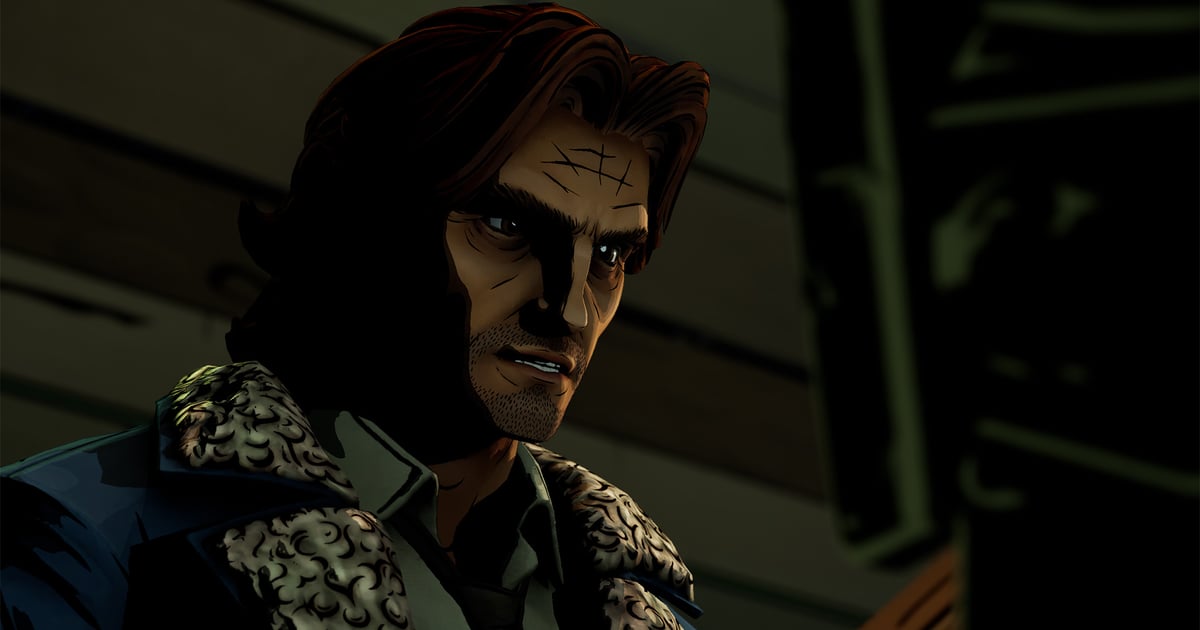
Telltale Games has risen from the ashes (for the second time). Last week, the makers of The Wolf Among Us 2 resurfaced after years of radio silence during the Summer Game Fest livestream with a new trailer and the announcement that PM Studios would be publishing the game, and that the two companies will be releasing a remaster of 2013’s The Wolf Among Us later this year (officially dubbedThe Wolf Among Us Remastered).
PM Studios is funding The Wolf Among Us 2, with CEO Michael Yum telling Game Developer that the company is laser-focused on supporting the storytelling studio to make sure it’s “shining.” “We always have the philosophy of being creator-first,” he said. “Our role is to be a supporting team…where we give production stability, distribution, go-to-market [strategy], and helping Telltale finish making this game.”



The news may be bittersweet for some in the game development community. On the one hand, it’s good news to see a storied studio return to the stage in an era of ongoing layoffs and studio closures. However Telltale’s 2018 “majority studio closure” was a deeply traumatic event for the developers who lost their jobs, and the studio has struggled with The Wolf Among Us 2‘s development, leading to a round of layoffs in 2023. Tales of the studio’s strengths and weaknesses have trickled out into the public realm over the years since, and it’s become clear that a number of flawed decisions from company leadership put the studio on the path to collapse.
What then, should the game industry expect of the Telltale Games of 2026? Has the company learned from its past mistakes?
It’s a topic we raised with CEO Jamie Ottilie during an interview with Game Developer that took place in advance of last Friday’s announcement. According to him, Telltale has spent the last two years overhauling its technology and processes to make The Wolf Among Us 2 the first of many games from this new incarnation of the company. The changes he described divert sharply from the studio’s past practices, and offer a case study in how developers can try to shed flawed workflows to produce better games and working conditions alike.
Ottilie says Telltale has abandoned many past practices
Telltale Games alumni and others close to the company may be surprised by some of the drastic shifts Ottilie described. Gone is the beloved (and infamous) “Telltale Tool,” which for all its strengths, was held back by its lack of a physics system and other outdated features. Ottilie said this version of The Wolf Among Us 2 (another version of the game was in development at Telltale before its 2018 crash) was originally being produced in a modified version Unreal Engine 4 that integrated the legacy tech, but in 2022 the company realized it had to abandon that path.
“That looked like a great idea on paper,” he said. “It seemed to promise lots of production efficiencies, time savings, and the best of both of worlds…that turned out not to be true.”
This workflow, he said, wouldn’t allow developers to produce content at “the speed and quality” needed to make the game. “We took the hard choice to reset, and unfortunately when you do a pipeline reset, it really involves going back to square one and unwinding everything. There’s going to be a period of time where you’re not producing content.”
Now the company is working in Unreal Engine 5, and working with co-development studios Trick and Side (as Ottilie detailed in an interview with IGN) to juggle labor needs. This was also when the studio decided to seek a publisher to bring The Wolf Among Us 2 to market, leading to them to sign with PM Studios in 2024.

Image via Telltale Games.
Telltale is also abandoning the process of dividing its developers into rotating teams that work on different game series. Though some employees are working on the remastered version of The Wolf Among Us, the sequel is largely being made by “one consistent team from start to finish.” The game will also be “content complete” before launch, with the entire story playable on day one. He praised Adhoc Studios’ episodic strategy for releasing Dispatch over the course of several weeks, but said this single-date strategy.
The story will still be told “episodically,” but Ottilie said working with PM Studios led the team to decide that a single release date would “make the most sense” as a go-to-market strategy.
These production changes aren’t just academic in nature. As tales of life at Telltale crept out over the years, it was clear that its production practices had a huge impact on developers’ quality of life. Game Developer has heard from workers who’ve said that studio leadership mandated a formulaic approach to storytelling, and that the company played fast and loose with job titles, sometimes not properly crediting developers properly for their work on the game.
Has the studio moved past those practices? Ottilie said that the answer is “yes.”
No plot mandates, avoiding crunch, and proper crediting
In conversations with various Telltale Games alumni over the years, we’ve heard repeatedly that executive leadership at the studio pressed developers to follow a repetitive formula for each of its games. Some developers have said that formula led to declining interest in its games.
“We didn’t really follow that approach,” Ottilie said when asked about the making of The Wolf Among Us 2. “We came at this from ‘what’s the best story we can tell here? How are we going to do that? What’s that feel like?'” He said his approach as CEO was to choose the game’s creative leadership and then “get out of their way.”
“It’s not my job to go into the room and second-guess how they want to tell a story,” he said, adding that while he is giving feedback and offering suggestions, he avoids being prescriptivist in his approach. He did say that some Telltale design knowledge—like the amount of time players should go without pushing a button onscreen—is still with the studio, but The Wolf Among Us 2 won’t be following a familiar roadmap.
On the topic of improper crediting, Ottilie actually said he “wasn’t aware” of the company’s history with that practice. “From our perspective, [proper crediting] is pretty mandated,” he promised. “People get job titles and have descriptions, and that’s what they’re doing on the game. Their credit will reflect what they’re doing on the game.”
“My [vice president] of operations will put my head in a box if I try to change that.”
And then there’s the topic of crunch. Previous reporting on Telltale attributed crunch to a number of factors, from the constant pace of episode releases to regular demands from CEO Kevin Bruner to make changes close to a game’s ship date (as described by Game Informer). More studios in the game industry have begun to adopt the notion that crunch is a result of “poor planning,” but the game industry is still learning how to properly plan game production, and even teams with the best intentions can be tasked with performing unpaid overtime.
“We’re obviously trying to avoid crunching,” Ottilie said. “I work in production, I work the same hours my team does. I don’t want to crunch—I’ve got kids and a life and stuff to do. Work-life balance is really important. People don’t do their best work when they’re ground up.”
He acknowledged that Telltale Games used to “build” crunch into its schedule, calling it a “crappy way to make games.” He also said ship dates in the game industry used to be heavily set by marketing departments, who wouldn’t bend when told by developers those dates weren’t possible. “We had this disconnect between marketing and development, where marketing would have a date, developers would know the date wasn’t possible, and then marketing would stamp their feet and say ‘we need the date.'”
“At the end of the day, you broke teams, you made a bad product, and that wasn’t a healthy thing…I don’t think you ever completely get away from having to work a little bit extra here and there to to make things better—particularly if you care, and you’re doing it because you want [the game] to be better. But there’s a world of difference between mandated crunch.”
“We’re not going to mandate crunch at all. We won’t name a release date until we’re confident in our ability to name a release date. And when we’re wrong—as evidenced by what we did in ’22 and ’23—we move it.”
Yum, the PM Studios CEO, weighed in here, saying that when he was arranging the company’s publishing deal with Telltale he pressed the company to give him a realistic development timeline. “I’ve funded over 200 games now and I’ve [rarely] seen one finish on time,” he quipped. “A big part of how I work is that I don’t push people on milestones.”
One pillar of Telltale’s old strategy is up in the air: the reliance on other companies’ intellectual properties. As the years went on, Telltale went from working with cheaper licenses like Sam and Max and Back to the Future to more expensive properties like Marvel Comics, DC Comics, and Game of Thrones. Licensed games can be big business, but highs fees and reduced creative control can leave studios exposed to factors outside their control.
Ottilie said that for now, the studio is focused on The Wolf Among Us 2 (which, for the unfamiliar, is based on the comic book series Fables created by Bill Willingham), and hasn’t decided if its next project will be an original IP or another licensed game. “We love Fables, and we’re happy to be working on Wolf, and what we’re doing now probably isn’t what we’re doing next,” he said, though he didn’t rule out the possibility of other Fables-inspired games.
“From a company growth plan, we’re really looking for sequential development of new games and stability—like a sequential slate of titles, instead of going parallel and trying to run multiple teams,” he said. “It’s like ‘hey, let’s do this really well, and then we’ll pick up another IP and put it into concept development before this game is done, so we have something that’s ready to go.”
Source link
#Telltale #Games #learn #mistakes





