

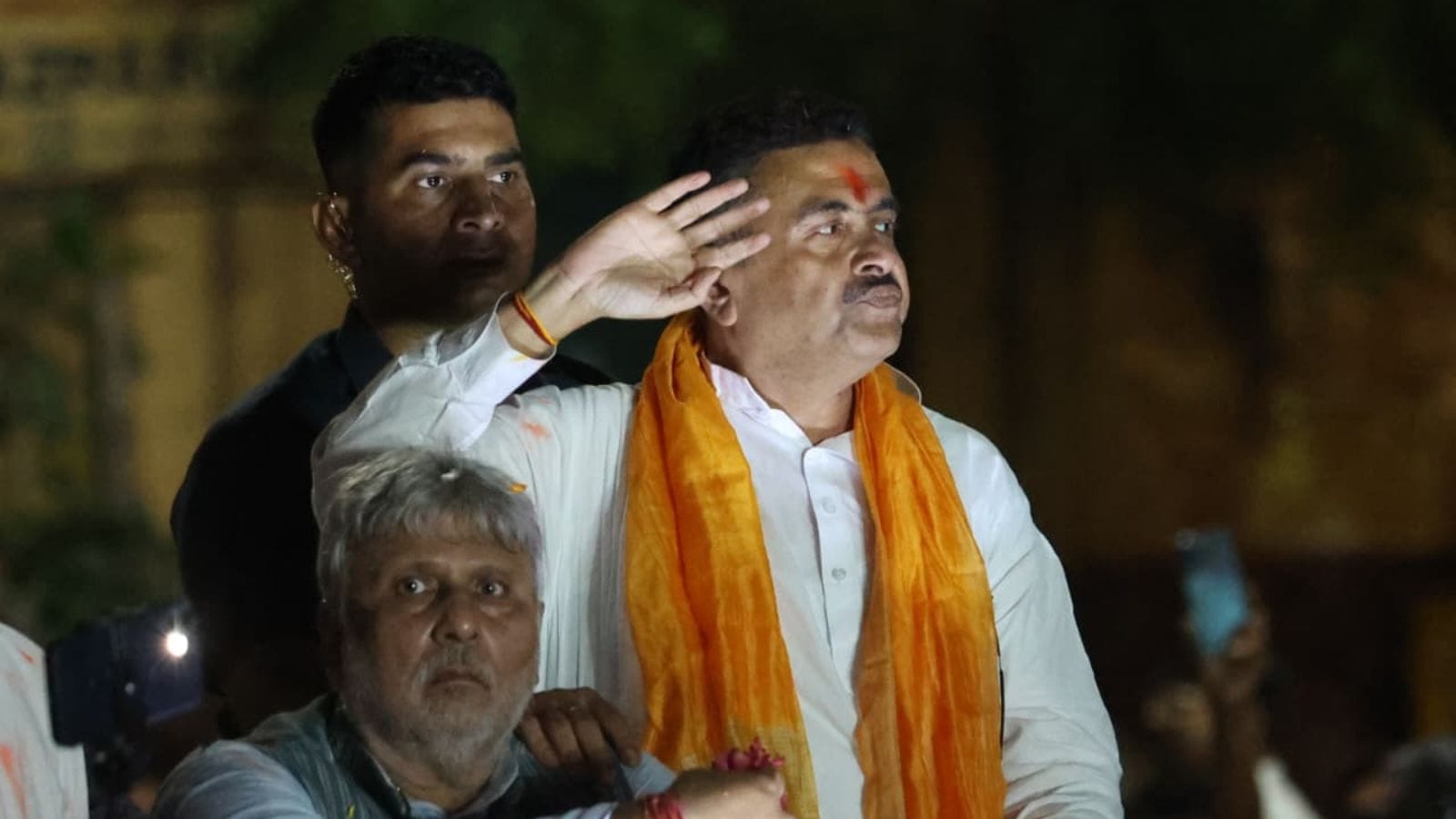
As the Suvendu Adhikari-led BJP government in West Bengal prepares its first Budget, it could be facing a near doubling of the state’s expenditure on social welfare schemes if it goes through with the party’s pre-poll promises. These include increasing the monthly assistance to women under the Lakshmir Bhandar scheme and the unemployment allowance, and clearing the Dearness Allowance dues.
If all three are implemented, the expenditure will go up to about Rs 1.29 lakh crore per year. As of now, the state government spends Rs 54,000 crore on Lakshmir Bhandar and unemployment allowance, with the DA dues not paid.



The estimated revenue deficit (expenditure compared to earnings) that West Bengal is looking at in 2026-27 is Rs 21,759 crore, while its debt burden for this financial year is expected to be Rs 8.15 lakh crore.
BJP sources argue that since the state government will now work in step with the Centre, with the same party in power in both for the first time, the “double engine” push will help Bengal over the financial bumps.
Under Mamata Banerjee’s Lakshmir Bhandar scheme, launched in 2021, women got Rs 1,500 a month, with those from SC/ST groups entitled to Rs 1,700 each. Around 2.20 crore women are currently enrolled for Lakshmir Bhandar, including 29.45 lakh in SC and 4.78 lakh in ST groups. The BJP had promised to hike the benefits for all to Rs 3,000 per month, meaning an expenditure of around Rs 79,000 crore per year (from Rs 39,000 crore now).
It has taken the first step towards refurbishing Lakshmir Bhandar, after renaming the scheme as Annapurna Bhandar.
The BJP manifesto also promised to increase monthly assistance for unemployed to Rs 3,000, apart from providing 1 crore new jobs and self-employment opportunities in the next five years. The TMC government had started its scheme for unemployed youths called Yuba Sathi, entailing Rs 1,500 per beneficiary, just before the Assembly polls, with 84 lakh-odd signing up for it within days.
With the doubling of the amount, the total expenditure on unemployment allowance would go up to around Rs 30,000 crore (from Rs 15,000 crore now).
Another of the BJP’s promises was implementation of the Seventh Pay Commission recommendations, and clearance of pending DA arrears, within 45 days of forming the government.
Currently, Central government employees get 60% DA, while for West Bengal staff, the figure is 18%. To ensure DA parity, as the employees have been demanding, West Bengal will have to spend Rs 20,000 crore extra in a year.
In an order on February 5, the Supreme Court directed West Bengal to clear the DA dues in accordance with the Fifth Pay Commission report. That entails payment of around Rs 42,000 crore as one-time compensation to government employees.
Together, DA payments alone may add up to Rs 62,000 crore this year.
Other than this, the TMC government had the Kanyasree Prakalpa scheme for girl students (started in 2013), Rupasree Prakalpa for financial help for marriage of a girl (2018), Krishak Bandhu for farmers (2019), and several schemes for fishermen in the state, together costing the state Rs 4,000 crore. Some of these will now be subsumed into Central schemes, such as schemes for farmers and fishermen, freeing up a portion of the state’s money.
The revenue deficit estimated in the vote-on-account submitted by the TMC government ahead of the Assembly elections, Rs 21,759 crore, was less than the revised estimation in the 2025-26 budget of Rs 41,164 crore. However, Finance Department officials said that an increase in expenditure due to expansion of schemes or payment of DA dues will take this up to Rs 31,000 crore.
Similarly, the vote-on-account debt estimation for 2026-27, at Rs 8 lakh crore-plus, was more than the Rs 7.62 lakh crore in the revised budget for 2025-26. It will go up further now.
States are expected to keep their outstanding debt to around 20% to 25% of the GSDP. In the case of West Bengal, this is around 38%.
A senior Finance Department official said the BJP government has taken its state finances into account. “Chief Minister Suvendu Adhikari has said that all DBT (Direct Benefit Transfer) schemes will continue. Naturally, it will increase the revenue deficit and burden on the state exchequer. On the other hand, now those Central government schemes which were stalled during the TMC government will be reintroduced, and money for that will come from the Centre. So Ayushman Bharat will replace Swasthya Sathi, and take that load off the state.”
Asked about the expenditure the state is looking at, Chief Secretary Manoj Agarwal said: “We will increase revenue and also decrease unnecessary expenditure. We will sit with finance officers and find a way out.”
Emphasising the “double-engine government” argument, Agarwal added: “The BJP has got a huge mandate for the first time in this state after Independence. So, the government has to fulfil people’s expectations while finding a way to not be saddled with a huge debt burden.”
Lakshmir Bhandar, now called Annapurna Bhandar
Total beneficiaries: 2.20 crore women
Currently:
Rs 1,500 monthly; Rs 1,700 for SC/ST women
Total expenditure: Rs 39,000 crore annually
BJP promise: Rs 3,000 for all monthly
Total estimated expenditure: Rs 79,000 crore annually
Unemployment allowance
Total beneficiaries: 84 lakh as of now
Currently:
Rs 1,500 monthly
Total expenditure: Rs 15,000 crore annually
BJP promise: Rs 3,000 monthly
Total estimated expenditure: Rs 30,000 crore annually
DA parity, arrears
Total beneficiaries: 3.25 lakh state govt employees, 3.5 lakh pensioners
Currently: Govt is not paying DA arrears, or ensuring parity with Central govt staff
BJP promise: Clearance of DA arrears, within 45 days
Total estimated expenditure: Rs 62,000 crore this year.
Source link
#Bengal #debt #double #ideal #BJP #govt #schemes #double #expense




