

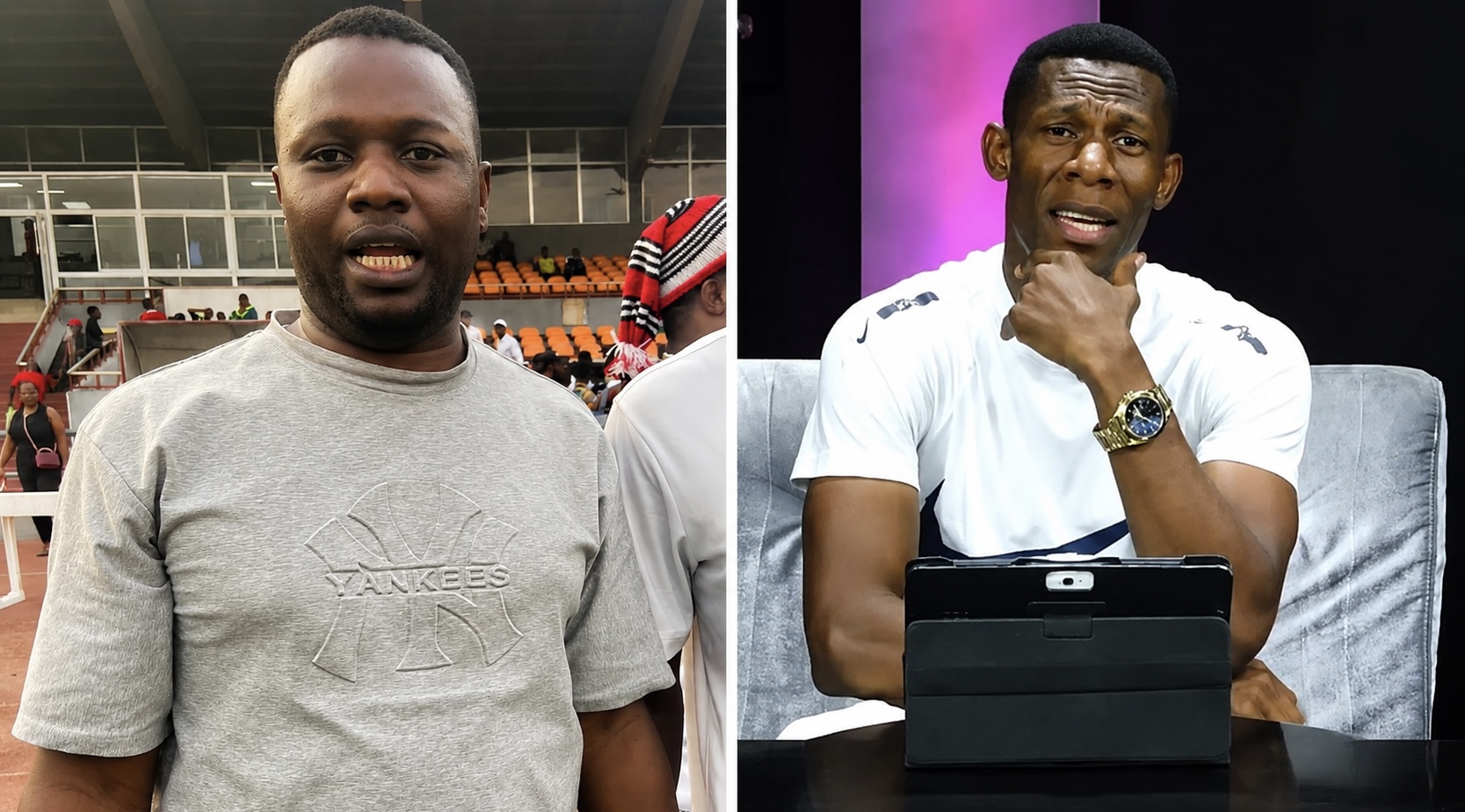
The past few days have produced an interesting debate in Nigerian football. Almost back-to-back, two of the biggest clubs in the country, Rangers International and Rivers United, announced sanctions against individuals they accused of making damaging comments and publications about their clubs.
Rangers International declared that social media influencer Amaechi Foundation would no longer be allowed into the Nnamdi Azikiwe Stadium, while Rivers United announced an indefinite ban on Prince Worlu of Prince CJ Sports World from all club activities and matches.

The actions have generated mixed reactions across the football community.

Let me state clearly from the beginning: this is not about supporting the comments, actions, or publications of the individuals involved. If they have made false claims, defamed anyone, or crossed legal boundaries, there are proper channels for addressing those issues.
My concern is different.
Should a football club have the power to stop a fan or critic from attending matches simply because of comments made on social media?
For me, that is where the real issue lies.
Nigerian football already struggles with attendance. Many league venues have thousands of empty seats every weekend. Clubs spend money trying to attract supporters to stadiums, yet attendance figures remain low compared to what is seen in many football countries.
At such a time, introducing a culture of banning fans over criticism could create a dangerous precedent.
Today it is one social media influencer.
Tomorrow it could be another supporter who questioned a transfer decision.
Next week it could be a fan unhappy with team selection.
Where does it stop?
If every club begins monitoring social media comments and banning people they dislike, we may end up pushing more supporters away from our stadiums rather than bringing them closer to the game.
From my review of the statements released by both clubs, there was no allegation of violence, stadium disorder, physical threats, or actions that endangered public safety.
The complaints mainly relate to publications, videos, criticism, and comments.
Those are issues that can be addressed through civil processes if the clubs believe reputations have been damaged. The police and the courts already exist to handle matters such as defamation, libel, blackmail, and other related offences.
That is why I believe the issue should not rest solely in the hands of football clubs.
If a supporter’s conduct genuinely warrants a football-related ban, then the proper process should involve the relevant State Football Association and ultimately the Nigeria Football Federation. Such a process would provide a neutral platform where both sides can present their cases before a decision is made.
Justice is always stronger when it is seen to be fair and independent.
What worries me even more is the precedent being created.
Rangers International, the reigning league champions, made the first announcement. Shortly afterwards, Rivers United followed with a similar decision.
These are not just ordinary clubs. They are among the biggest and most influential football institutions in Nigeria today. When leading clubs take certain actions, others often follow.
That is why this matter deserves serious attention.
Football has always been a game built on passion and expression.
Across Europe, supporters regularly challenge club owners, executives, and even managers. Fans of Manchester United have repeatedly staged protests against the Glazer family. Supporters of Arsenal spent years displaying banners demanding change under former owner Stan Kroenke. At Valencia, fans have organised demonstrations against Peter Lim. Even at some of the world’s biggest clubs, criticism is part of football culture.
The important point is that disagreement does not automatically make someone an enemy of the club.
In fact, many critics are passionate supporters who simply want their teams to improve.
Of course, criticism should be responsible. False accusations should not be encouraged. Personal attacks should not be celebrated.
But neither should football become a space where only praise is permitted.
A healthy football culture allows room for debate, disagreement, and accountability.
This is why I believe the Nigeria Football Federation should step into the matter before this becomes a common practice across the country.
The NFF has a responsibility to protect not only clubs but also the integrity of the game and the rights of supporters.
If this precedent is allowed to stand unchallenged, we may soon find ourselves in a situation where clubs routinely lock out fans for social media comments, online criticism, or unpopular opinions.
That would not strengthen Nigerian football.
It would weaken it.
Our league needs more supporters, not fewer.
It needs fuller stadiums, not emptier ones.
And above all, it needs a system where justice is delivered through proper football and legal channels rather than through decisions that may appear one-sided.
Football belongs to everyone. The clubs, the players, the administrators, the media, and most importantly, the fans.
Any action that risks driving supporters away from the game should be approached with great caution.
Source link
#Rangers #International #Rivers #United #Ban #Critics #Stadiums #Clubs #NFF #Decision




