

One of the most common debates in sports is surprisingly simple:
Which athletes make more money?


Whether it’s football versus basketball, football versus baseball, or even footballers versus musicians, fans are constantly comparing salaries and wondering why one superstar appears to earn significantly more than another.

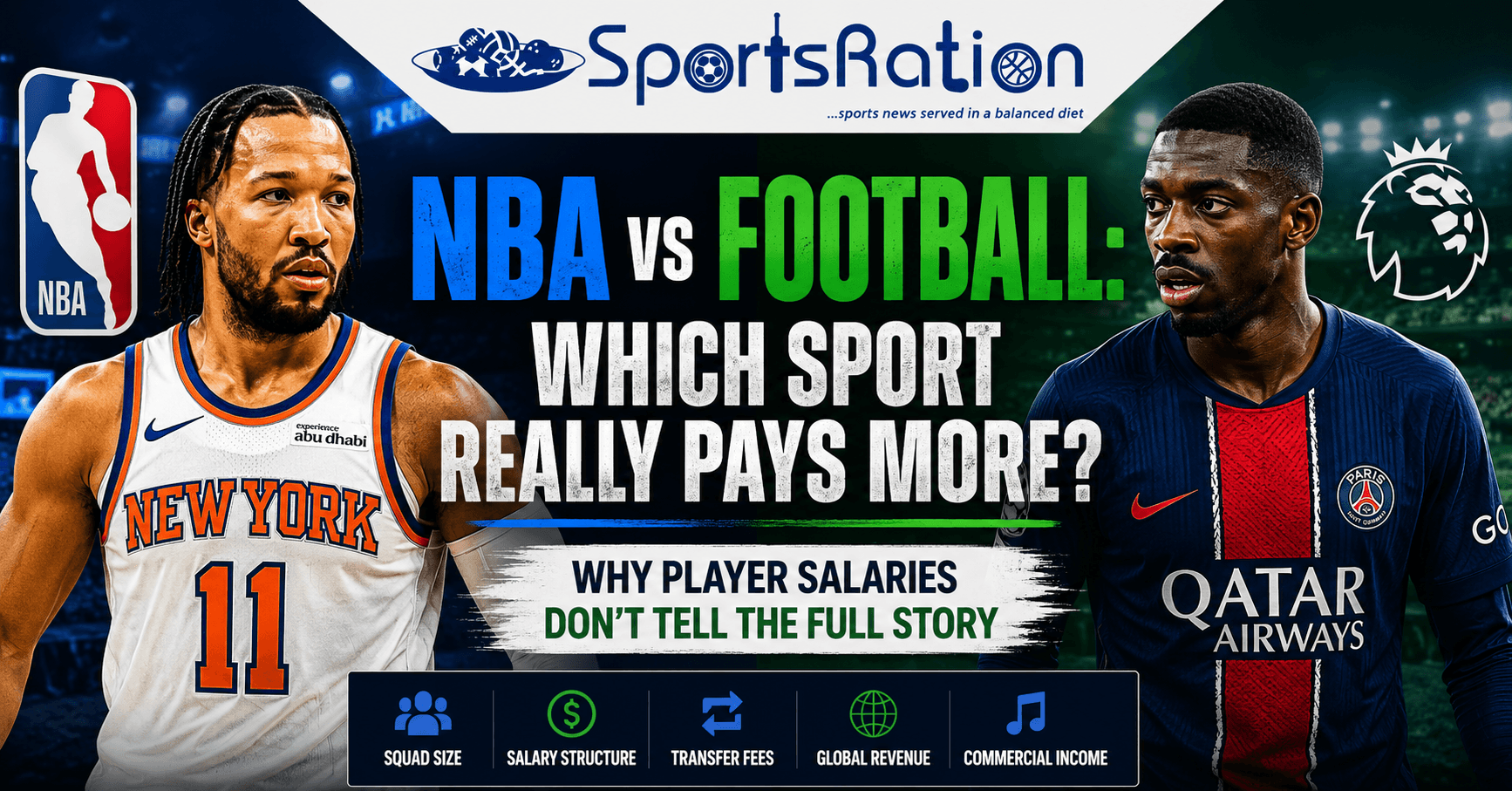
The latest example involves New York Knicks star Jalen Brunson and Paris Saint-Germain forward Ousmane Dembélé.
On paper, Brunson reportedly earns substantially more in annual salary than Dembélé despite football being the world’s most popular sport and Dembélé being one of the biggest names in the game.
At first glance, it doesn’t seem to make sense.
But the reality is that comparing salaries across different sports often tells only part of the story.
The systems that generate and distribute money in football, basketball and even the music industry are completely different.
The Brunson vs Dembélé debate
The comparison that recently went viral showed that Brunson’s annual NBA salary is significantly higher than Dembélé’s reported fixed salary at Paris Saint-Germain.
That immediately raised questions.
How can an NBA player earn more than a footballer who plays for one of the biggest clubs in the world?
How can a player competing in a sport followed by billions of people earn less than a basketball player whose league is largely concentrated in North America?
The answer lies not in popularity, but in economics.
Why NBA salaries are so high
The NBA operates under a salary-cap system that is directly tied to league revenues.
Players receive a significant share of Basketball Related Income (BRI), meaning the league’s earnings are shared between owners and players.
More importantly, NBA rosters are small.
Each franchise typically carries around 15 players.
That means billions of dollars in league revenue are divided among far fewer athletes.
As a result, elite NBA players regularly sign contracts worth $40 million, $50 million or even $60 million per season.
Jalen Brunson’s contract reflects not only his value as a player but also the financial structure of the NBA itself.
Dembele would be the 96th highest paid player in the NBA. NBA money is different pic.twitter.com/SEQPX1Da0v
— Banter FC (@FCBanter_) June 12, 2026
Football clubs spend money differently
Football operates under an entirely different model.
When a club signs a player, the cost goes far beyond wages.
Clubs may have to pay:
- Transfer fees
- Agent commissions
- Signing bonuses
- Loyalty bonuses
- Image-rights agreements
- Performance incentives
- Salaries
When Paris Saint-Germain signed Neymar from Barcelona, the French club spent a world-record €222 million transfer fee before accounting for wages.
Real Madrid paid over €100 million to acquire Jude Bellingham.
Those costs do not exist in the NBA.
Basketball teams generally spend their money directly on player salaries rather than transfer fees.
That is one of the biggest reasons NBA salaries often appear larger.
Squad sizes matter
Football clubs also carry much larger squads.
A Champions League club may have 25 to 30 senior players, plus academy players regularly training with the first team.
NBA teams typically have only 15 roster spots.
That means football clubs must spread their resources across far more players.
Even when football generates enormous revenue, the money is distributed differently.
Popularity doesn’t equal salary
One mistake many fans make is assuming popularity automatically determines earnings.
Football remains the world’s most popular sport.
Players such as Lionel Messi, Cristiano Ronaldo, Kylian Mbappé and Ousmane Dembélé are recognised across virtually every continent.
Yet popularity alone doesn’t dictate salary levels.
The NBA’s revenues are concentrated within a single league featuring just 30 franchises.
Football’s revenues are spread across hundreds of leagues and thousands of professional clubs worldwide.
The structure of the business matters more than follower counts on social media.
Why some musicians earn more than footballers
The same debate exists outside sports.
Fans often wonder why some musicians appear to earn more than elite footballers.
Again, the answer depends on where the money comes from.
A footballer’s income generally comes from:
- Club salary
- Bonuses
- Sponsorship deals
- Image rights
A musician can earn through:
- Touring
- Streaming royalties
- Publishing rights
- Merchandise sales
- Brand endorsements
- Ownership of music catalogues
- Investments
Unlike athletes, musicians are not restricted by salary caps, squad budgets or transfer markets.
A global tour can generate hundreds of millions of dollars.
Artists such as Taylor Swift, Drake, Beyoncé, Burna Boy and Davido have built business empires that extend far beyond music itself.
In many cases, their total earnings can rival or exceed those of elite athletes.
The hidden value footballers create
Another factor often overlooked is the transfer market.
Football clubs treat players as assets.
A club may pay €100 million to sign a player and later sell him for another massive fee.
That transfer value becomes part of the player’s overall economic worth.
In the NBA, most of that value is reflected directly in salaries.
In football, it is split between wages and transfer fees.
That is why a player earning less than an NBA star may still represent a far greater overall financial investment.
The real takeaway
The next time a graphic comparing the salaries of an NBA player, footballer or musician goes viral, remember that salary alone rarely tells the full story.
Jalen Brunson earning more than Ousmane Dembélé does not mean basketball players are more valuable than footballers.
Likewise, a musician earning more than a footballer does not automatically mean the music industry is richer than football.
Each industry distributes money differently.
Different business models create different pay structures.
And while the numbers on the paycheck may grab attention, they are only one piece of a much bigger financial puzzle.
Source link
#NBA #Players #Earn #Footballers #Truth #Sports #Salaries #SportsRation




